★ The Great Plunder · Part I
I
Diagnosis
We pluck those who feed us
Jacobus van Merksteijn · Malta, June 2026
We do not plunder our wealthy to lift our poor — we plunder them so that we too may die just as poor.
No redistribution. No justice. Plunder with a calculator.
And we vote for the plunder, again and again, because that is how our democracy works. This is not an article about what others do to us. This is a mirror.
How far we have fallen
Start with the numbers, because they do not lie.
The eurozone contracted by 0.2 percent in the first quarter of 2026. America grew by 0.4 percent, year-on-year by 2.6 percent. The growth gap between America and Europe has doubled since 2000: from fifteen to thirty percent. Our productivity per worker now stands at eighty percent of the American level. In the innovation index we rank behind China and South Korea.
Of the Draghi report — our own official diagnosis, written by our own former prime minister — we have implemented fifteen percent after nearly two years. Fifteen percent. A man we commissioned to tell us what needs to be done wrote three hundred pages of recommendations, and we have done almost nothing with them. Not because we do not believe him. Because none of his recommendations suit us in the short term.
We work less than our parents. The average employee in the eurozone works 120 hours per year less than in 1995 — three full working weeks less, every year. We produce less per hour than the Americans. We invent less than the Chinese. We build less than the Vietnamese. And yet we expect our prosperity to remain the same.
Our pensions, healthcare and defence cannot all be paid for out of what remains. One of the three must give way, or money must come from somewhere. We have cut none of the three. So we find money somewhere.
The three options, and which one we chose
There are three ways out of this trap.
The first: work harder. Put in more hours. Forget early retirement. Become more productive. That is unpopular, because it costs discomfort. No party dares to say it.
The second: distribute less. Lower benefits. A more modest pension. Fewer public services. That is political suicide, because the majority now lives from a benefit, a pension, a public sector salary, or a subsidy. No party survives it.
The third: tax the productive minority additionally. Their profit, their wealth, their succession, their departure. That is what we have chosen. Not once, not by accident, but at every election anew.
We vote for parties that promise to raise wealth taxes. We vote against parties that say the retirement age must go up. We applaud in talk shows when "a fairer contribution from the rich" is discussed. We stay silent when the factory in Roermond closes and production moves to Poland.
There is no malicious outsider doing this to us. No Brussels bureaucrat. No American billionaire. No Chinese exporter. We do this ourselves. We, the majority, have decided that our wealthy should be plundered. We find it just. And tomorrow, when the consequences become visible, we will be surprised.
What we ordered in June 2026
Let us list this year's orders. These are not future plans. This is happening now.
Germany. The umbrella union federation DGB demands a one-off levy of ten percent on all wealth above ten million euros, spread over twenty years. Yield: 350 billion euros. Plus the return of an annual wealth tax from one million euros. The DIW, the German Institute for Economic Research, funded by German taxpayers, argues for two percent per year. The German voter approves.
France. An exit tax from a portfolio of 800,000 euros or a stake of fifty percent in a single company. Social levies raised in January from 17.2 to 18.6 percent. The French voter is furious when the diesel price rises ten cents. He applauds when the entrepreneur is targeted.
Norway. Since 2025 an exit tax of nearly thirty-eight percent on unrealised share gains, payable after twelve years — even if nothing has ever been sold. A fiscal claim that pursues you across the border and hits you out of the blue after a decade. The Norwegian Labour Party passed this with a large majority. The voters then re-elected it.
Netherlands. On 12 February 2026, the Dutch House of Representatives adopted the Box 3 actual-return legislation with 124 votes in favour. From 2028, an exit tax on start-up shares and foreign real estate. The conserving assessment on the substantial interest in your own private company: unlimited in time. A shadow that follows you to the grave. One hundred and twenty-four elected representatives, chosen by you, by us, the Dutch voter.
Belgium, Denmark, Spain, the United Kingdom. The same pattern. Exit taxes, wealth levies, the end of non-dom arrangements. In the United Kingdom, 16,500 millionaires left in a single year, taking an estimated 87 billion euros in wealth with them. The British voter shrugs. They are just the rich.
Brussels. Our elected European representatives are working on a directive for a minimum exit tax for all member states. Plus eleven billion euros per year in new levies for the EU budget from 2028 to 2034. Hanging over all of this is the proposal of French economist Gabriel Zucman: two percent per year on wealth above one hundred million, with the express right for states to tax those who leave as residents for "five to ten more years". Serfdom with a bank account.
We did not merely allow this. We ordered it. With our vote.
The South African mirror
We know where this road leads. We have seen it happen in our own lifetime, in a country that was once the wealthiest on its continent.
South Africa decided in the nineteen-nineties to plunder its productive class. Not only through taxes, but through laws that redistributed productive land, through quotas that replaced productive workers, through a political climate that declared the farmer and the manufacturer enemies of the nation. The reasoning sounded moral: justice, redress, equality. The practice was plunder.
Now read the figures from Statistics South Africa, June 2026. Official unemployment is 32.7 percent. Broadly measured, including those who have given up looking for work: 43.7 percent. Nearly one in two economically active South Africans has no job. Youth unemployment among 15- to 24-year-olds stands at 60.9 percent. Three in ten young people who want to work find work.
Electricity production fell for six consecutive quarters in 2026. A country with gold in the ground can no longer keep its own lights on. Heavy industry contracted in the first quarter for the sixth consecutive time. Technical talent is leaving in its thousands at once. Estimates suggest the South African technology sector is experiencing a talent exodus so severe it threatens national security. Young doctors, engineers, AI specialists — to Australia, to America, to England. Wherever they are still valued.
And the people left behind are looking for a scapegoat. In June 2026, tens of thousands of South Africans march through the streets demanding that "the migrants must go". Not the migrants with villas and businesses — those barely exist. The poor migrants. The Zimbabwean refugee who still finds work. The Mozambican market trader. The Malawian in a cleaning service. The public anger does not turn against the system that impoverished them. It turns against the weakest others within that same system.
That is how a civilisation dies. Not suddenly. Not spectacularly. Statistically, decade by decade, with a growing resentment towards those who still have something.
What we have not learned
We have seen this — we watched the South African documentaries, we read the articles, we shook our heads over Mandela's legacy — and we are doing it again. Not in a faraway country. In our own Europe.
We have made our entrepreneurs into suspects. In the Dutch media, an entrepreneur with a limited company is a tax dodger until proven otherwise. In the German media, the Mittelstand businessman is a tax schemer. In the French media, the patron is an exploiter. It is a cultural climate that precisely mirrors South Africa in the nineteen- nineties: moral contempt for productive people, presented as progressive justice.
We have taught our young generation that building is suspicious. A twenty-five-year-old in Eindhoven who sees how his uncle's metalworking business is pressured learns that becoming a civil servant is the wiser choice. A thirty-year-old in Stuttgart considering taking over a factory sees the exit tax and the restrictions on R&D deductions and opts for a public sector job. A twenty-four-year-old in Milan with talent for fashion chooses a corporate role at a French group rather than starting out on his own, because entrepreneurship "no longer pays".
In two generations we have all but extinguished entrepreneurship as a way of life. We have treated the people who still build as though they are doing something shameful. And we are getting what we ordered: a continent without builders.
We told our older generation — the one that built the prosperity — that its success was indecent. The sixty-five-year-old manufacturer who has spent his life building a family business hears from his grandchildren that his wealth is "unfairly distributed". He stays silent, because any explanation is dismissed as the self-defence of privilege. We have taken away his voice before we take away his money.
What this really is
This is not redistribution. In genuine redistribution, money flows from those who have a surplus to those who lack it, and is made productive there. Here it flows from those who still build into a public budget that spends it immediately.
The money does not go to new factories. It does not go to research. It does not go to technology. It goes to pensions that are no longer funded. To public sector salaries that are no longer proportional to output. To subsidies for sectors that would not exist without those subsidies. It is consumed, not invested.
That is plunder, not redistribution. Capital is converted into current consumption until the capital is exhausted. After that, everyone is left empty-handed. The end of such a cycle is not equality in prosperity, but equality in poverty.
We have chosen this. Again and again. We keep choosing it. And we will keep demanding that the rich pay even more, long after it is too late to reverse the pattern.
Who is in the trenches
The irony is brutal. The group we are now fiscally bleeding dry is the same group that has contributed most over the past forty years: entrepreneurs, inventors, engineers, family businesses, patent holders.
Not the speculators. They moved their structures elsewhere long ago. Not the heirs of colonial fortunes. They are in Monaco and the Bahamas. Not the financial traders. They have already relocated their jobs to Singapore and Dubai.
Those being plundered are the people who still actually run a factory in Tilburg, exploit a patent out of Eindhoven, turn an innovation into a product in Groningen. The family that wants to pass its manufacturing business to the third generation. The inventor with twenty patents whose lab is in Delft. The mid-sized chemist in Geleen who wants to modernise his production process. Precisely the people we need to escape our productivity trap, we treat as cash cows.
That is not a policy mistake. It is a choice we make. Our choice. To place the burdens of a failed economic model on those who still work, rather than on those who benefit from it. On the manufacturer in Tilburg, not the civil servant in The Hague. On the chemist in Leverkusen, not the consultant in Brussels. On the inventor in Milan, not the retiree on the Côte d'Azur.
In our majority we have decided this is fair. And we insist we have nothing to do with the consequences when they arrive.
Closing
This is not a war on wealth in the sense of a noble struggle for justice. It is an ordinary clearance sale of what others have built, carried out by a political class we elected to do exactly that.
And it will continue until we get what we asked for: an impoverished, outputless people on an ageing continent. Like South Africa. With the same numbers, on a delayed timeline, in a different climate, under a different flag. But with the same result. A people that drove out its builders and wonders where the bread went.
In Part II I describe the walls we have built to trap our own builders before they leave. In Part III: what happens when we get what we ordered. In Part IV: who we elected to do this for us.
For now the diagnosis is enough. We are doing this ourselves. We vote for it. We applaud it. And when the consequences catch up with us, we will act as though it happened to us.
Scandalous is too weak a word. The right word is: deliberate.
PART II OF FOUR
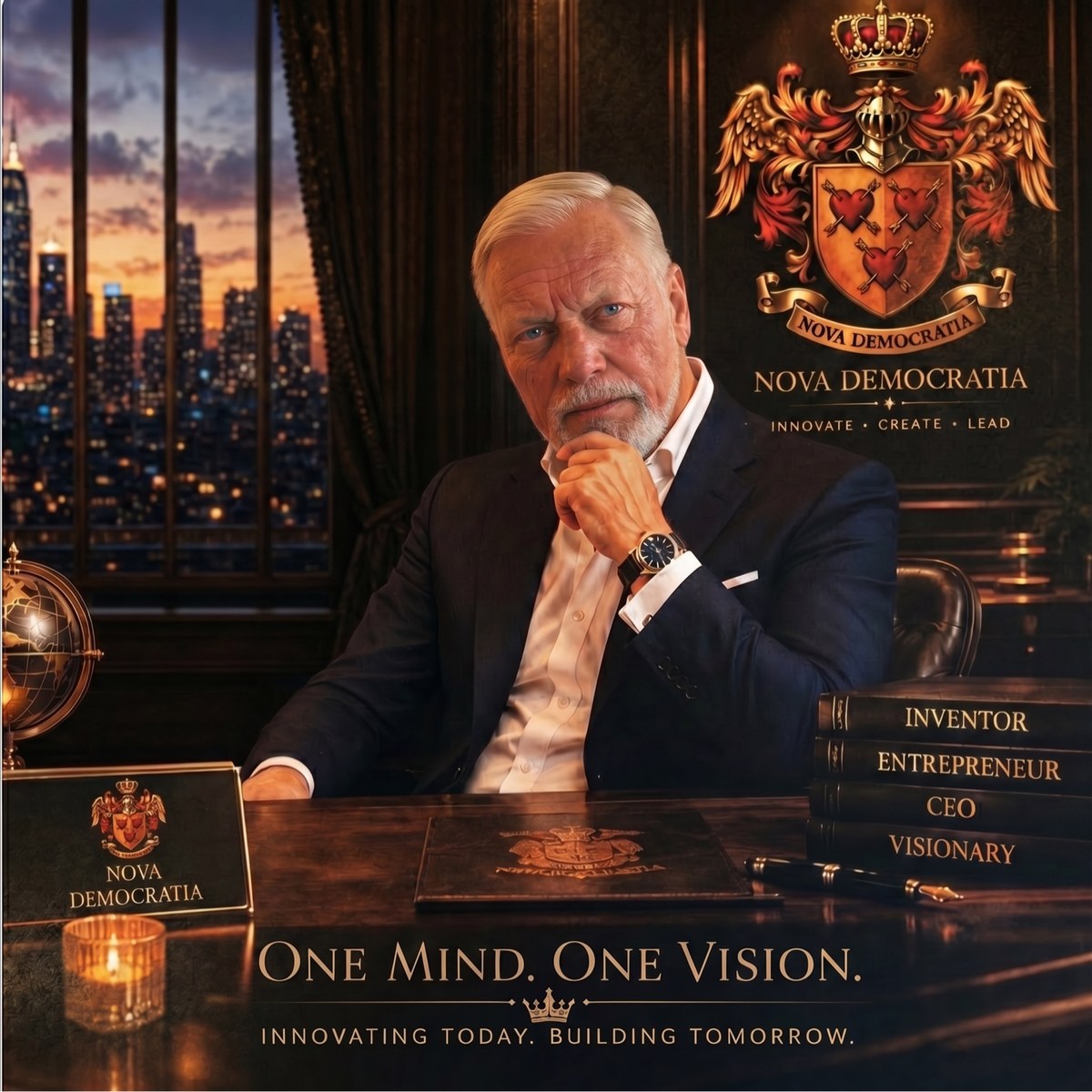
Jacobus van Merksteijn
Editor-in-chief of Het Open Vizier. Entrepreneur, developer of industrial and governance innovations (Carbon-Alert Ltd, TerraClean Ltd, GuardSkin Ltd). Writes about economic, ecological and political system questions from first-hand experience with the Brussels and The Hague decision-making machinery.