★ The Great Plunder · Part II
II
Mechanics
The walls we have built to lock our builders inside
Jacobus van Merksteijn · Malta, June 2026
Plunder requires technique. You cannot simply strip the wealthy bare; you must ensure they cannot run, cannot shift assets, and cannot look away. That is why we have built three walls simultaneously.
Ring wall one: higher rates within. Ring wall two: claims at the border. Ring wall three: international coordination outside. Whoever sees the three together no longer sees a series of separate measures. They see a fortress. And whoever looks inside that fortress sees not one tyrant but millions of hands carrying the stones. Our hands.
The first wall — which we raise a little higher every evening
The first wall is the most visible. Wealth taxes, higher top rates, the end of lump-sum systems, taxation on "actual returns". The instrument is comparable everywhere: from a simple tax return to a complex administration where the citizen must declare their actual wealth annually, with the burden of proof resting on them.
In the Netherlands the new box-3 system comes into force in 2028. In Germany the DGB plan for two per cent wealth tax per year is circulating. In Spain and Norway wealth taxes are already running. In France and Belgium social levies are rising. The pattern is the same everywhere: broader base, higher effective burden, more administration.
The productive citizen is no longer taxed on what they earn, but on what they own. That difference is fundamental. Income tax penalises consumption. Wealth tax penalises saving, investing, and accumulation. We have chosen to penalise accumulation. We have chosen against capital formation. That is not a technical detail; that is a civilisational choice.
We did not merely vote for this. We designed it. The Dutch box-3 reform was written by officials of the Ministry of Finance, educated at our universities with our tax money. The German wealth tax proposals come from the DIW, financed from the German treasury. The French exit tax was elaborated by tax lawyers from the École Nationale d'Administration, an institution we established to train our elite.
This is not the work of anonymous forces. It is our own institutions, our own academics, our own civil servants, paid from our own treasury, designing the wall behind which we wish to lock our builders. And they do it with conviction. They believe in it. We have convinced them. We have read the books they wrote. We have applauded their lectures. We have funded their research.
The second wall — which we have built around them
The second wall is newer and more vicious. No longer "you live here, you pay here", but "you once lived here, you keep paying". The instrument is called exit tax. We have ordered it in every flavour.
Norway levies 37.84 per cent on unrealised share gains upon departure, payable after twelve years — even without a sale. France trails its claim for eight to fifteen years. The German Wegzugsteuer kicks in as soon as you hold a one per cent stake in any company whatsoever. The Netherlands imposes a conservatory assessment on substantial interests that remains standing indefinitely. Belgium introduced in April 2026 a trailing window of twenty-four months in which gains follow you across the border.
The legal principle behind all these arrangements is identical: the state arrogates to itself the right to tax someone on the basis of where they have been, not where they are. That is the end of the territoriality principle as it has functioned since Westphalia. In four centuries we have learnt that a person can detach from a country — that the right to leave is a human right — and we have now reversed that decision.
Think for a moment about what this concretely means. The French inventor who wishes to settle in Switzerland because their research partner is at ETH will be fiscally pursued by the French state for fifteen years. The German Mittelständler who wants to transfer his factory to his daughter in Italy finds his assets frozen for twelve years by the Wegzugsteuer. The Dutch family business owner who wants to move to Spain for their health discovers that their conservatory assessment hangs indefinitely.
We voted for parties that said: "we will not let the rich escape." We greeted that slogan with applause. We did not ask what it actually means. It means: serfdom with a bank account. The Zucman doctrine says it openly. A country may "continue to tax departing residents as residents for five to ten years". That is no longer fiscal policy. That is a new form of slavery, wearing the smile of morality.
The third wall — which we have not even noticed
The third wall is the most invisible and therefore the most dangerous. It is called CARF and DAC8. It has been operational since 1 January 2026 in 76 jurisdictions.
CARF is an OECD acronym. DAC8 is a European Commission acronym. Together they close the last gap in international information exchange. Banks have been reporting all your accounts to your tax authority since 2017. From 2026 crypto platforms, custodians, brokers, and wallet providers report too — automatically, cross-border, in real time.
Additionally, from mid-2026 the European Digital Identity Wallet becomes mandatory for financial services. Every transaction above a threshold becomes traceable to a state-certified identity. Privacy through anonymity — the old model of Swiss bearer coupons, Liechtenstein foundations, Panamanian companies — we have statutorily terminated within eighteen months.
We wanted this. Over the past ten years we have demanded that the wealthy can no longer shift assets offshore. We have praised journalists who published offshore lists. We have jeered politicians who expressed any suggestion of fiscal restraint. We have demanded the transparency we are now receiving.
And we have not noticed that the same instrument that makes the wealthy transparent also makes us transparent. Every transaction. Every account. Every purchase above a threshold. Our own freedom of financial movement has been smoked out in the hunt for the rich. We built the panopticon we thought only others would sit inside. We were wrong.
Who designs the walls
The ease with which we talk about "Brussels" and "the elite" and "the political class" is a lie we tell ourselves to conceal our complicity.
Gabriel Zucman is no anonymous bureaucrat. He is a French economist who teaches at Berkeley, publishes in our journals, speaks at our conferences. We welcomed him in 2008 as a promising doctoral student. We placed his books on bestseller lists. We elevated his proposals to serious policy because we find them sympathetic. He is not them. He is one of us.
Emmanuel Saez is his co-author. Thomas Piketty his predecessor. Marcel Fratzscher in Germany, Esther Duflo at MIT, Branko Milanović in Belgrade and New York. They are all academics with good intentions and well-argued analyses. We have formed them, funded them, praised them, elevated them to our moral compass. We get the policy we asked them for.
The civil servants in The Hague, Berlin, Paris, and Brussels who write the laws studied at our universities, were trained in our traditions. The union leaders demanding the German €350 billion levy represent our employees. The journalists who explain the policy write for our newspapers. The judges who apply the laws are our judges.
And above all this stand we, the voters. Not one emperor, not one party, not one government. An eighty-five-million-strong German, a sixty-eight-million-strong French, an eighteen-million-strong Dutch majority that keeps choosing parties heading in this direction. We are the architect. We are the contractor. We are the bricklayer. And we are the prisoner.
The three exits still open
Within Europe there are exactly three legal routes left for those wishing to keep their wealth out of reach. Not four, not ten. Three.
Italy, with the 24-bis regime: a flat tax of €200,000 per year on all foreign income, rising to €300,000 in 2026.
Switzerland, with the cantonal lump-sum, still intact in Valais, Ticino, and Vaud. In Zurich and Basel abolished by referendum — by Swiss voters making the same choices as us.
The United Arab Emirates, outside Europe. Outside our culture. Outside our language. With an autocratic political climate that is not to everyone's taste, but with zero personal income tax and the legal space to build a business.
Other exits we have sealed by law within eighteen months. The British non-dom: abolished in April 2025 under a Labour government that the British electorate chose. Portuguese NHR: abolished in 2023 under political pressure we exerted. The Spanish Golden Visa: abolished in April 2025. Maltese investment citizenship: struck down by the European Court of Justice in April 2025, on complaints we encouraged.
We have bricked up the exits one by one. With our own hands. And we have received applause for it from our own press. We congratulated each other every time an escape route was closed.
Why 2026 to 2028 is the decisive window
The sequence of measures betrays the plan, and we have cheered every step.
First close the escape routes — that happened in 2025. Then activate the information infrastructure — that happened on 1 January 2026. Then tighten the exit taxes — that is happening now, in 2026. Then introduce the new levies — that is planned for 2027 and 2028.
Whoever reacts only in 2028 reacts too late. The claim the Netherlands places on your private company shares applies to whoever is a fiscal resident on 1 January 2028. The Norwegian twelve-year clawback applies from the day you depart. The Belgian twenty-four-month window starts running on your deregistration date. Every month of waiting costs a month of room to manoeuvre.
That is not coincidence. That is design. Not by anonymous forces, but by people we have elected to draw up this plan. People who will ask for our vote again at the next election, and whom we will probably vote for again.
The moral cover we sell each other
We sell all this to each other under three words: fairness, solidarity, transparency. None of them describes what is actually happening.
Fairness would be: equal rules for those who produce and those who consume. What we do is the reverse — we tax extra those who produce, we spare those who consume. The civil servant pays no wealth tax because they have no wealth. The pensioner pays no exit tax because they do not leave. The benefit recipient has no substantial interest claim because they hold no substantial interest. We have designed a tax system that exactly spares those who receive the most from the state, and exactly hits those who take the least from it.
Solidarity would be: a voluntary contribution from the strong to the weak. What we do is a compulsory transfer under threat of exit prohibition. We call that solidarity because we do not wish to say aloud what it actually is.
Transparency would be: the citizen's right to know what the state does. What we do is the reverse — the state's right to know everything about the citizen. We shifted the accent of the word without anyone noticing. Once, transparency was about the government. Now it is about you.
The words have been inverted, and we have applauded the inversion.
Conclusion
The mechanics are in place. Three walls, simultaneous, coordinated. We have carried every stone, attended every meeting, ratified every election.
A window of eighteen to twenty-four months in which capital can still choose. After that the system closes, and "your wealth" becomes a term with an asterisk: your wealth, insofar as the state allows you to keep it.
In Part III: what happens when we get what we have ordered. What our South Africa will look like when the moment arrives. And why the people who have shouted loudest for the plunder will suffer the hardest.
For that is the cruellest lesson of history, and the least written about: a people that has driven out its builders ends up poorer than its refugees.
PART III OF FOUR
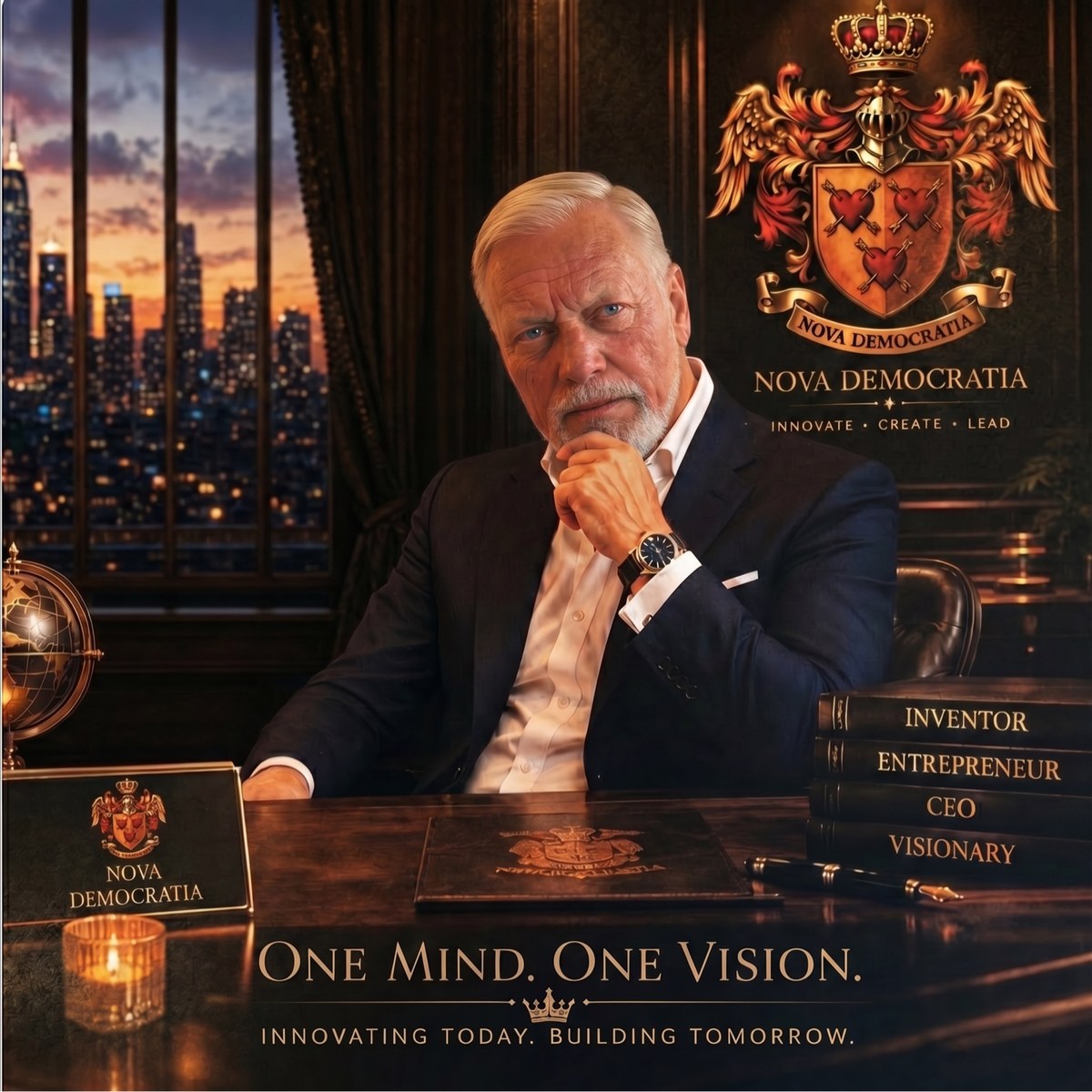
Jacobus van Merksteijn
Editor-in-chief of Het Open Vizier. Entrepreneur, developer of industrial and governance innovations (Carbon-Alert Ltd, TerraClean Ltd, GuardSkin Ltd). Writes about economic, ecological and political system questions from first-hand experience with the Brussels and The Hague decision-making machinery.