Retrospective
What this edition tells together
Reflection · 8 min read
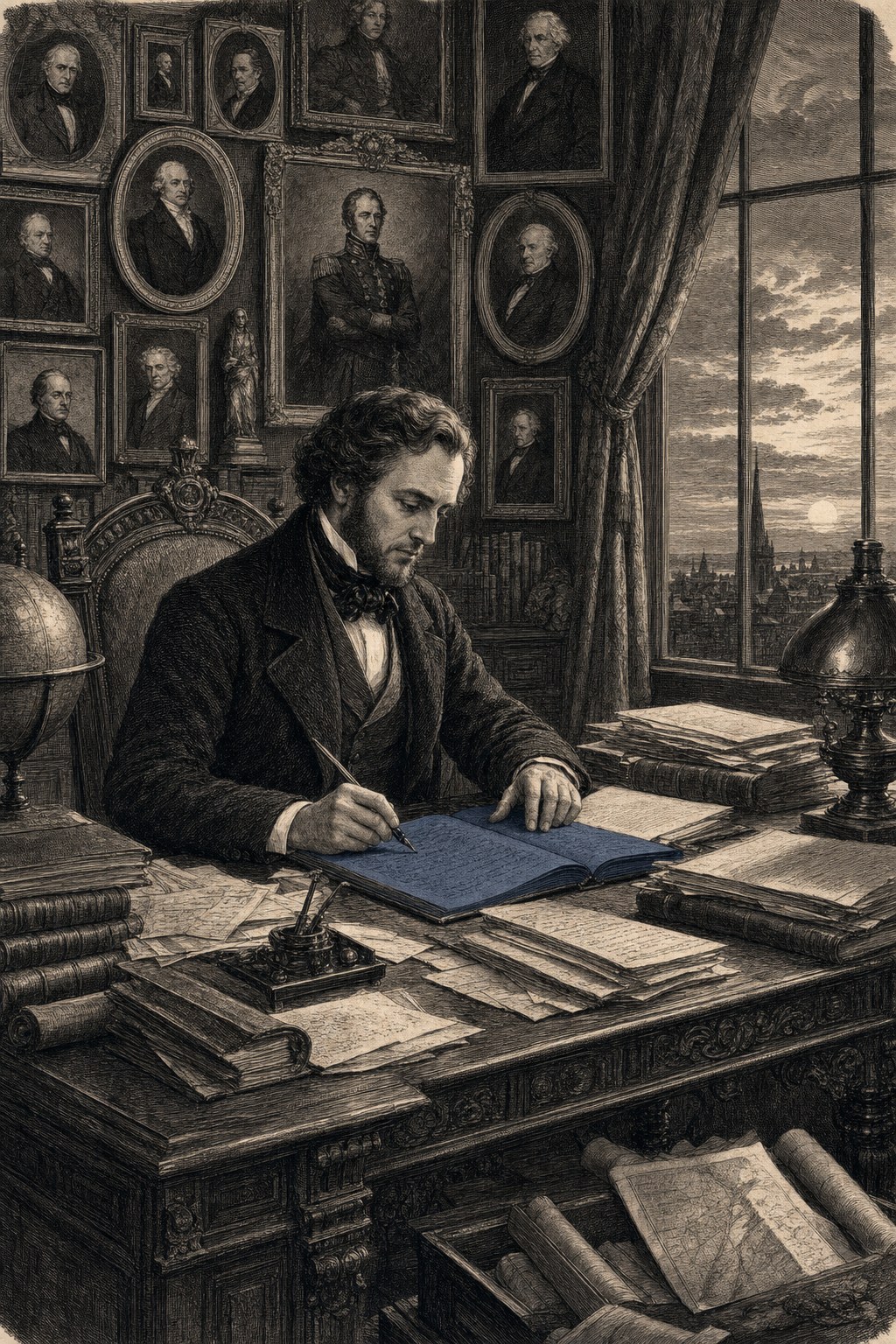
Eight articles. Eight positions in society. Eight times the same pattern in a different suit. Read them in sequence and it is impossible to call this a series of coincidences any longer. It is one law, operating in every system that has grown large enough to forget its own people.
Let me name that law here as it really is, without circumlocution.
What the eight articles show together
We began with the paper industry. The subsidy system that systematically channels public money to those who do not need it — not out of bad faith but through the logic of a filter that rewards application craft and excludes substance. The law of the bank, but paid for by everyone.
Then the CEO who leads his company through dashboards while the reality on the shop floor has long been saying something different. Who has come to know the quarterly report as his only reality and his own judgement as a danger. Who has become an administrator where he should have been a leader.
The turnaround consultant who walks into a company in trouble and leaves with his invoice while the cause of the problem — the missing judgement — never appears in his report. His instrument is his model. His model knows no people.
The banker who extends credit to those who can demonstrate the past and refuses it to those who will make the future. Who turns down the entrepreneur on the basis of a score that measures what already exists and ignores what does not yet exist. Who has handed in his own judgement for an algorithm that frees him from accountability.
The insurer who defines loss according to what the policy says and not according to what the insured has suffered. Who has made the small print his reality and the real situation his problem.
The insurer who defines loss according to what the policy says and not according to what the insured has suffered.
The regulator who enforces what is measurable and ignores what is meaningful. Who measures compliance and not effect. Who counts reports and not outcomes. Who has taught the sector how to look good on paper while continuing to make the same mistakes in practice.
The judge who administers justice on the basis of what is in the file and not on the basis of what they see. Who has swapped truth for evidence. Who has elevated procedure above judgement. Who knows this sometimes produces the wrong result and yet sees no alternative, because the system does not permit it.
And finally the deeper question: how did it come to this, who has an interest in it, and does this only concern institutions or also our own minds?
One answer: in each of these cases the same thing has disappeared. The judgement of the person closest to it. The primal sense of the craftsman, the lender, the doctor, the official, the judge. The bottom brain layer that works fastest and most accurately, and that was the first to be removed the moment the system grew large enough to organise itself.
What this says about our society
It is tempting to treat this as a list of incidents. Bad regulations here, a malicious sector there, insufficient oversight somewhere else. That is the safe analysis, because it calls for technical repairs and no fundamental honesty.
But what this edition shows is not a list of incidents. It is a civilisation that over two centuries has dismantled its own toolkit. That began with the rightful liberation from arbitrariness and ends with a system that has replaced arbitrariness with something worse: the systematic inability to judge.
The arbitrariness of the aristocrat was visible, contestable, personal. You knew who was deciding and you could call them to account. The arbitrariness of the system is invisible, impersonal, covered by procedure. You do not know who decided, because no one decided — the form did it. There is no counter for appeal, because the procedure was followed. There is no one accountable, because everyone did their job.
The arbitrariness of the system is invisible, impersonal, covered by procedure.
That is not fairer than the aristocrat. That is worse, because it has the illusion of justice while having destroyed the capacity for correction.
And the price is paid by those who do not command the system. Always. The entrepreneur without a grant writer. The patient without a lawyer. The employee without an HR department. The citizen who does not know which form to submit. These are the people the system says it works for, and these are the people it most consistently excludes.
What the reader can do with this
I do not write this publication to enlighten people. I write it to name something that people already know but do not dare to say out loud.
Because that feeling — the feeling that something is not right, that the procedure is working against you when it should be helping you, that there is no one looking at you while everyone claims to be listening — that feeling is there in people. It is there in the nurse who is reporting while her patient waits. It is there in the teacher who is testing while his pupil is stuck. It is there in the bank employee who turns down an entrepreneur while knowing the idea is good but the score too low. It is there in the official who applies a rule that was not made for this situation.
What I hope you take from these eight articles is not a political programme. It is a recognition. It is the language for something you already sensed.
What I hope you take from these eight articles is not a political programme.
Because once you see it, you see it everywhere. In the meeting that reaches no decision. In the procedure that produces an outcome no one wants. In the accountability cycle that costs more than the work itself. In the job application assessed by an algorithm that has never spoken to the person. In the health policy that excludes precisely what you need.
And once you see it, you can speak about it. Not as lamentation, but as diagnosis. And a diagnosis is the beginning of treatment — even if that treatment takes longer than one edition of one publication.
Looking ahead to edition 5
What edition 4 has described is the system as it is. Edition 5 — and I make no promises here, because the publication makes itself in the time it takes — will be about what people do who do things differently.
Not utopian alternatives. Not blueprints. But concrete people, concrete situations, concrete choices where someone used their judgement when the system forbade it. Where someone set a form aside and started a conversation. Where an assessor said: I know what the procedure says, but here is what the situation demands.
Those people exist. They are rare, but they exist. And they are proof that it can be done differently — not as a system, but as a choice.
Why this publication exists
I write Het Open Vizier because too little is said that needs saying.
Not because the other publications do not see it — sometimes they see it perfectly well. But because the tone of public debate has the feel of a courtroom: no one speaks without protecting their position. Everyone has a stakeholder in mind. Everyone weighs their words on the scales of what is contestable and what is not.
I do not have that burden. This publication has no advertisers to protect, no subsidy grantor to keep satisfied, no supervisory board to convince. It has only readers — and the tacit agreement that I say what I genuinely think, even when that is uncomfortable for people who read it.
That is not a licence for carelessness. It is an obligation to honesty. Every article in this edition has asked me to write things I would rather not have said out loud — because I know that people I respect appear in it, in positions I am criticising. But the alternative is muttering in the bushes. And I did not found this publication for that.
Society has too little Open Vizier. Too much closed visor — too many people who see what is there and stay silent because speaking is risky, because the system does not protect them, because no one around them says it either. This publication is an attempt to pull that closed visor open. Not for everyone. But for those who want to read it.
If you have come this far, you already know why.
This is edition 4, article 9 — the closing piece. The series continues on openvizier.org.
Retrospective
Eight articles. Eight positions in society. Eight times the same pattern in a different suit.
"It is one law, operating in every system that has grown large enough to forget its own people."
What the eight articles show together
The paper industry channelling public money to those who do not need it. The CEO leading through dashboards while the shop floor says otherwise. The consultant whose model knows no people. The banker who finances the past and refuses the future. The insurer who made the small print his reality and the real situation his problem. The regulator who counts reports and not outcomes. The judge who swapped truth for evidence.
In each case the same thing disappeared: the judgement of the person closest to it. The bottom brain layer that works fastest and most accurately, and was the first to be removed the moment the system grew large enough to organise itself.
Worse than the aristocrat
It is tempting to treat this as a list of incidents calling for technical repairs. But it is a civilisation that over two centuries dismantled its own toolkit — that began with the rightful liberation from arbitrariness and ends with something worse.
The arbitrariness of the aristocrat was visible and contestable; you knew who decided. The arbitrariness of the system is invisible and covered by procedure. No one decided — the form did it. That is not fairer. It is worse, because it has the illusion of justice while having destroyed the capacity for correction.
And the price is always paid by those who do not command the system: the entrepreneur without a grant writer, the patient without a lawyer, the citizen who does not know which form to submit.
What the reader can do with this
I do not write to enlighten people. I write to name something people already know but do not dare to say out loud. That feeling — that the procedure is working against you when it should be helping you — is there in the nurse reporting while her patient waits, in the official applying a rule not made for the situation. What I hope you take from this is not a programme. It is a recognition, language for something you already sensed.
Edition 5 will be about people who do things differently — concrete choices where someone used their judgement when the system forbade it. They are rare, but they exist. And they are proof that it can be done differently: not as a system, but as a choice.
Close
I write Het Open Vizier because too little is said that needs saying. This publication has no advertisers, no subsidy grantor, no supervisory board — only readers, and the tacit agreement that I say what I genuinely think, even when it is uncomfortable for people I respect who appear in it. The alternative is muttering in the bushes.
"Society has too much closed visor. This is an attempt to pull it open. If you have come this far, you already know why."