The demand on the reader
What you can do with this instrument — and why that is what the paper industry can least bear.
Closing · 5 min read
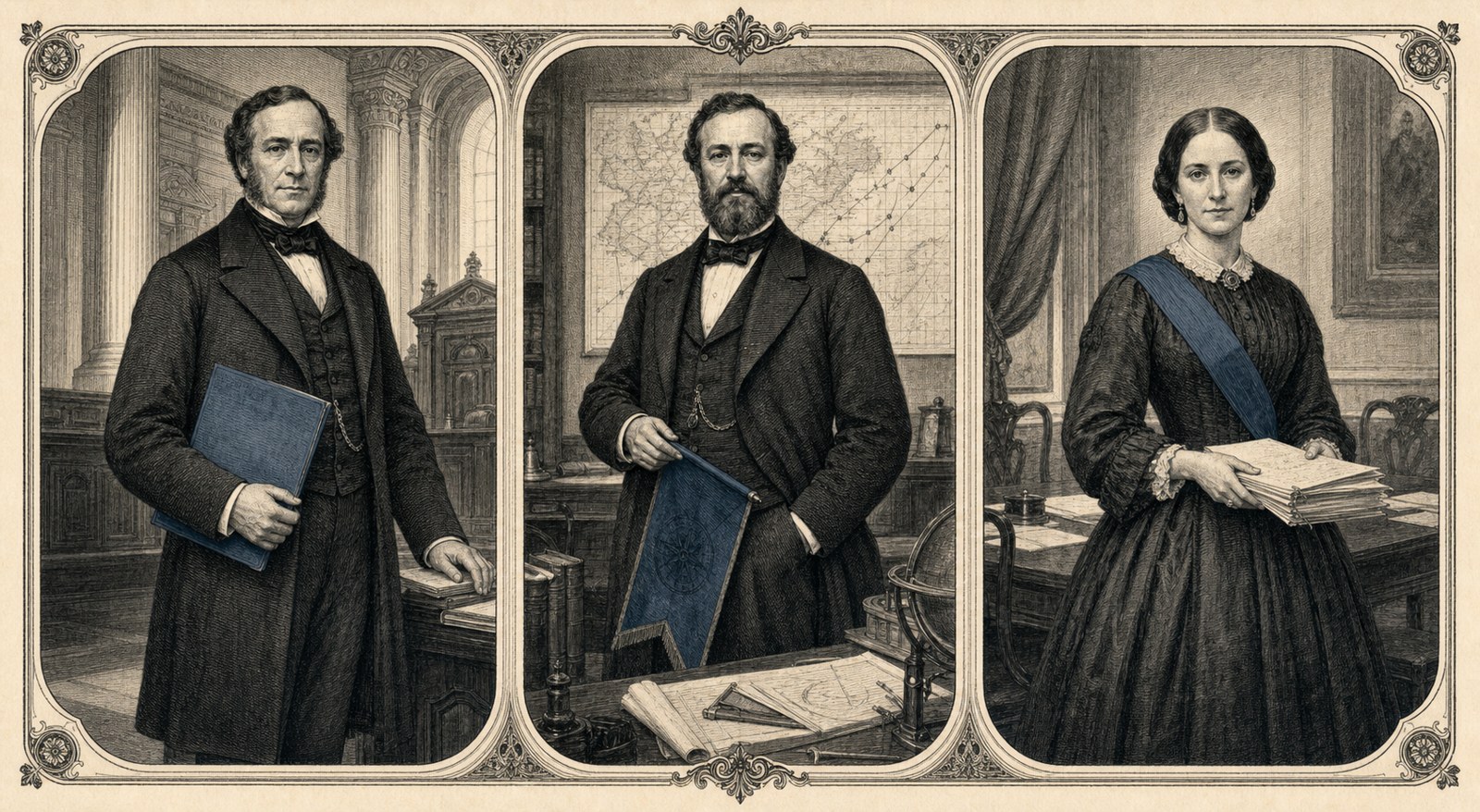
At the end of this paper, the instrument lies on the table. You have seen three dossiers in which press and policy elevate second- and third-order factors to the first. You have seen three people who, in an inverted world, nonetheless held their compass steady. You have seen four diagrams that show in a single glance what a text needs twenty minutes to explain.
I ask nothing of you. No membership, no donation, no petition, no demonstration. Het Open Vizier is free and will remain so. What I ask of you is something only you can do.
Read tomorrow's newspaper with this instrument in hand. Write in the margin which order is being sold as which. Do this for every article that contains numbers, for every article in which an actor is identified as responsible, for every article from which a conclusion is drawn. Ask yourself: has the dominant factor been named? Is this actor's contribution genuinely first order, or has he been promoted to the first order by framing? Which factors are missing that would, by physics or by statistics, rank higher?
Do that for a week. Perhaps two weeks. After that, your relationship with your newspaper will have changed. You are no longer a consumer; you have become a reader. A reader who recognises ranking.
This is what a paper industry can least withstand. Not protest, not angry letters, not petitions. A reader who calculates. A reader who has recovered the ranking instinct that our grandparents possessed and we have discarded.
You are that instrument. I have only placed it in your hands.
Jacobus van Merksteijn Calvià, July 2026
## Sources
Edition 5 stands on the shoulders of others. The following publications were consulted for the figures and arguments in this edition:
- IPCC AR6, Global Warming Potential tables (2021–2024), in particular the distinction between fossil and non-fossil methane. - TNO quickscan on methane emissions in the Netherlands, published by SodM/EZK on 26 May 2026. - Bette de Koning and Eva Rooijers, "Methane rules promise enormous climate gains, but according to gas companies they threaten Dutch gas production", Het Financieele Dagblad, 23 May 2026. - Het Financieele Dagblad, "United States warns Europe over methane rules", 20 May 2026. - European Commission, "Commission future-proofs Natura 2000 against climate change", guidance of 25 March 2026. - STOWA, deltafact Effects of climate change on terrestrial nature. - OBN, Drought — a drastic impact on nature in elevated parts of the Netherlands (2021). - Natura 2000 Recovery Strategies, Intermezzo I. - Council of State, ruling of 29 May 2019, ECLI:NL:RVS:2019:1603, concerning the Nitrogen Approach Programme. - Kaoru Ishikawa, Guide to Quality Control (Asian Productivity Organization, 1968). - Joseph M. Juran, Quality Control Handbook (McGraw-Hill, 1951 and later editions), for the Pareto principle in quality management.
For the portraits in article 04, the underlying journalistic sources are listed separately at the foot of each portrait.
At the end of this paper, the instrument lies on the table. You have seen three dossiers in which press and policy elevate second- and third-order factors to the first. You have seen three people who, in an inverted world, nonetheless held their compass steady. You have seen four diagrams that show in a single glance what a text needs twenty minutes to explain.
I ask nothing of you. No membership, no donation, no petition, no demonstration. Het Open Vizier is free and will remain so. What I ask of you is something only you can do.
Read tomorrow's newspaper with this instrument in hand. Write in the margin which order is being sold as which. Do this for every article that contains numbers, for every article in which an actor is identified as responsible, for every article from which a conclusion is drawn. Ask yourself: has the dominant factor been named? Is this actor's contribution genuinely first order, or has he been promoted to the first order by framing? Which factors are missing that would, by physics or by statistics, rank higher?
Do that for a week. Perhaps two weeks. After that, your relationship with your newspaper will have changed. You are no longer a consumer; you have become a reader. A reader who recognises ranking.
This is what a paper industry can least withstand. Not protest, not angry letters, not petitions. A reader who calculates. A reader who has recovered the ranking instinct that our grandparents possessed and we have discarded.
You are that instrument. I have only placed it in your hands.
Jacobus van Merksteijn Calvià, July 2026
## Sources
Edition 5 stands on the shoulders of others. The following publications were consulted for the figures and arguments in this edition:
- IPCC AR6, Global Warming Potential tables (2021–2024), in particular the distinction between fossil and non-fossil methane. - TNO quickscan on methane emissions in the Netherlands, published by SodM/EZK on 26 May 2026. - Bette de Koning and Eva Rooijers, "Methane rules promise enormous climate gains, but according to gas companies they threaten Dutch gas production", Het Financieele Dagblad, 23 May 2026. - Het Financieele Dagblad, "United States warns Europe over methane rules", 20 May 2026. - European Commission, "Commission future-proofs Natura 2000 against climate change", guidance of 25 March 2026. - STOWA, deltafact Effects of climate change on terrestrial nature. - OBN, Drought — a drastic impact on nature in elevated parts of the Netherlands (2021). - Natura 2000 Recovery Strategies, Intermezzo I. - Council of State, ruling of 29 May 2019, ECLI:NL:RVS:2019:1603, concerning the Nitrogen Approach Programme. - Kaoru Ishikawa, Guide to Quality Control (Asian Productivity Organization, 1968). - Joseph M. Juran, Quality Control Handbook (McGraw-Hill, 1951 and later editions), for the Pareto principle in quality management.
For the portraits in article 04, the underlying journalistic sources are listed separately at the foot of each portrait.