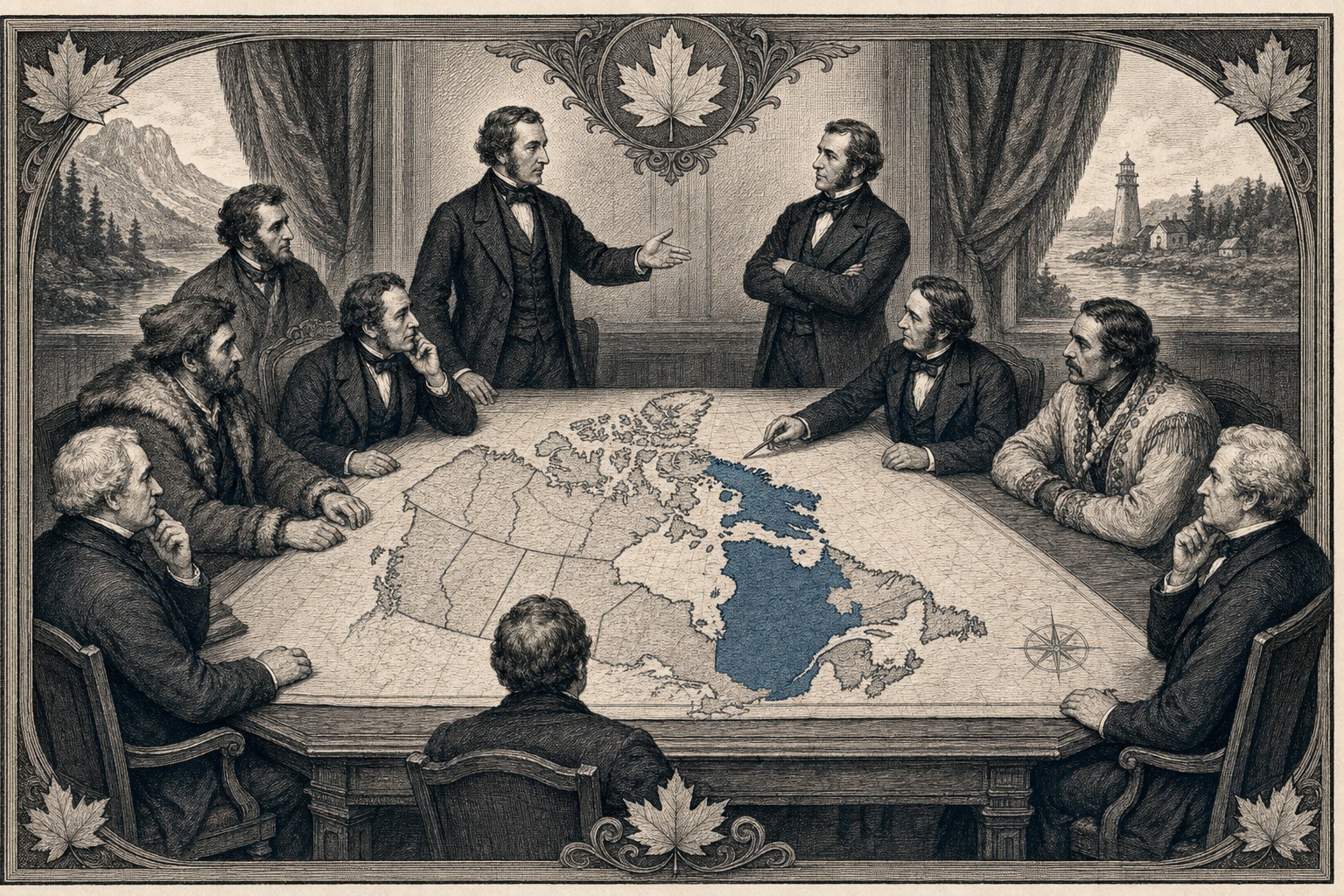
Those who find Switzerland too exotic for a Dutch comparison might turn to Canada. A vast, parliamentary, federal nation with robust regions and a civil service tradition fashioned after the British model. Canadian deputy ministers — the equivalent of Dutch secretaries-general — earn between 196,000 and 408,400 Canadian dollars per annum; this amounts to approximately 280,000 euros, a figure significantly exceeding the Balkenende-norm and yet existing without the political fever that such a sum would inevitably provoke in the Netherlands.
What Canada adds to the Swiss narrative
Federal, vast, parliamentary — closer to the Netherlands
Switzerland is small and collegial, whereas Canada is vast and parliamentary. The Canadian comparison is, in several respects, more relevant to the Netherlands than the Swiss one: Canada possesses an equivalent to the House of Representatives with parliamentary groups that form coalitions, and a Senate that is not elected. It is in this latter feature that Canada holds an institutional lesson for Nova Democratia.
Appointed Senate with an independent commission
Since 2016, Canadian senators have been appointed by the Independent Advisory Board for Senate Appointments. Not by the parties, nor by the Prime Minister alone, but by an independent commission that assesses candidates on quality and regional balance. It is a hybrid model: not democratically elected, not party-appointed, but neither is it chosen by lot.
For Nova Democratia, this is a valuable comparison. Citizen assemblies by lot — the Nova proposal — are institutionally closer to the Canadian independent appointment than to the Swiss direct vote. Both avoid the grip of political parties. Selection by lot adds what appointment cannot: popular representativeness as a statistical principle rather than as the judgement of a commission. Nova Democratia utilises Canadian practice to lend credibility to citizen assemblies, refining it by the addition of the lot.
High salaries, low political temperature
Canadian deputy ministers earn more than twice the Balkenende-norm without it becoming a point of national contention. The reason: Canada long ago accepted the relationship between remuneration and quality. What is still framed in the Netherlands as a 'culture of greed' is, in Canada, simply the labour market reality for top-tier public positions. It serves as proof that a high ceiling does not automatically lead to public outrage; it depends entirely upon the framing.
What is called a culture of greed in the Netherlands is known as the labour market in Canada. The difference lies not in the salaries, but in the framing.
Where Canada itself struggles
Canada is by no means a perfect example. There are three vulnerabilities from which Nova Democratia has learned.
Provincial inequality in education. Canada possesses no federal ministry of education; each province governs its own schooling. The effect: vast disparities in quality and funding between Ontario, Quebec, and the prairie provinces. Nova Democratia deliberately centralises the examination framework precisely to prevent this. Decentralisation has its limits, and Canada demonstrates where those boundaries lie.
Senate appointment remains politically contentious. Although the Independent Advisory Board functions well, critics maintain that an unelected house is fundamentally undemocratic. Selection by lot through citizen assemblies avoids this reproach: citizens select citizens, rather than politicians selecting "immediate dependents".
No sunset clauses on laws, no classification of order. Canada, much like the Netherlands, possesses an expanding and complex body of legislation. Nova Democratia’s sunset and classification are, in this regard, improvements upon the Canadian model, rather than mere copies.
Open Vizier · novademocratia.com · Working Material · Jacobus van Merksteijn · June 2026