There is a design on the table that I believe can fundamentally simplify Dutch municipal organisation. VMB-EGS — citizen government in blocks, with a register that records everything, with reading confirmation before each vote and rollback at every error. Ten municipalities have been worked through. The numbers are on the table: for a city like Hengelo it means the order of € 90 to € 110 million per year less apparatus cost, plus freed real estate, plus faster decision-making.
But numbers on paper are not introduction. There must be people who dare. One municipality must be the first.
This article is an open and honest proposal. No sales pitch. No promise it can happen tomorrow. But a working-out of why a municipality like Hengelo could be the one to take the first step — and what that concretely means.
What a municipality would gain
For a municipality of around 80,000 inhabitants — Hengelo is close — the calculation looks as follows:
| Item | Current | Under VMB-EGS |
|---|---|---|
| Civil-service staffing | ~900 FTE | ~350 FTE |
| Apparatus cost per inhabitant | ~€ 1,000 | € 320 |
| Total apparatus cost | € 80 mln | € 26 mln |
| Vacated office space | — | ~15,000 m² |
| Terrace-permit lead time | 4–8 weeks | 2 hours to 3 days |
| Neighbourhood-investment lead time | 3–5 months | 1–3 weeks |
| District-project lead time | 6–12 months | 4–10 weeks |
About € 50 million per year is freed. Plus real estate that can be converted into 60 to 90 apartments, or returned to city ground. Plus parking spaces that no longer need to be civil-service parking. Plus a tax reduction or an education investment that was otherwise impossible.
That is what a municipality gains.
In addition the inhabitant gains something that weighs more than money: visibility of decisions. Every vote in a block is recorded in a public Track, with name and reference, with the documents on which it is based, with the execution that followed. For the first time a citizen can check who decided what on what grounds.
And the executing civil servant — the care consultant, the youth worker, the enforcer — gains something too. No more meeting culture, no column of people above writing proposals about his work. The system does what the column did. Execution remains with the human.
What the municipality does not gain
Honesty belongs here. Three things do not get better through this system.
It does not solve youth care. It does not change poverty. It does not bring housing into being that does not exist. What it does do is make the approach to those problems faster, more transparent and reviewable. Not the solution — the way to it.
It also takes effort. A neighbourhood block works only if there are citizens willing to fill the chairs. In neighbourhoods where that does not work, the district block takes over — extra load for district members. Compensation for block roles must be realistic, otherwise the system dries up.
And the law must follow. The Municipality Act now requires a council. The position of the mayor is constitutionally fixed. The GDPR limits what personal data the system may process. Nothing insurmountable, but no design that can land without political adjustment.
The software does not yet exist
I must say this openly. The design is there. The software is not. The flow diagrams, the screen books, the data dictionaries, the selection block, the oversight block, the reading confirmation, the snapshots, the rollback — everything is worked out on paper. What is not there is working software.
The estimate for building a first working version:
| Component | Lead time | Notes |
|---|---|---|
| Core (blocks, votes, tracks, rollback) | 4–6 months | The heart of the system |
| Reading confirmation + rest time | 1–2 months | The quality mechanism |
| Selection block | 2 months | Citizen-council pool, sortition |
| Oversight block + markings | 2 months | The feedback loop |
| Screens + UI | parallel, 4–6 months | What the user sees |
| Workable version total | 6–12 months | With team of 4–6 developers |
Cost: about € 1 million, payable in advance. That is a development team of four to six people for a year, plus testers, plus a jurist for the GDPR architecture, plus a designer for the screens. No more. No less.
A municipality that is first to introduce does not pay this development alone. A more logical model:
| Contribution | Amount | Role |
|---|---|---|
| Private investor or foundation | € 500,000 | Believes in the idea |
| First municipality (one-off) | € 250,000 | Becomes first user |
| Second municipality or ministry | € 250,000 | Creates experimental space |
Who pulls the cart
Such a change is never carried by one person. But without one person who dares, it does not move either. Four roles are needed.
The political driver
Someone within the council or executive who defends the proposal against the column they sit in themselves. A council member, a deputy mayor, or a mayor willing to look beyond their own position. Not from self-sacrifice — from conviction that it becomes better.
The civil-service driver
A municipal secretary or director who brings the civil-service organisation along. Someone who can explain to their own people that the column disappears but the execution stays, and that execution becomes stronger precisely because of it.
The substantive driver
Someone who knows the design through and through. At this moment I am that person. Someone who can explain at every phase what the system does and what it does not do, who can defend the architecture against wrong adjustments, who knows the screens, the blocks and the Track.
The financial driver
An investor or foundation that puts up the million in advance without the certainty of a direct return. Someone who sees it as a contribution to public government, not as investment in a commercial product.
Four people — or four small groups. More is not needed to start. But each of the four must be there.
How do you turn a municipality
A municipality does not change through persuasive power alone. Four steps, in order.
Step 1: Question in the council
One council member puts a question to the executive: "Has the executive taken note of the VMB-EGS design? Is the executive willing to start an exploration into what it would mean for our municipality?" That is a normal procedure, costs nobody anything, and puts the subject on the agenda.
Step 2: Exploration by executive or secretary
The executive has an internal exploration done — no external consultancies, because they have an interest in it not going through — by the municipal secretary themselves, with substantive support from the designers. Lead time: three months. Cost: a few thousand euros for the external support.
Step 3: Pilot in one block
Not the whole municipality at once. First one part: the Selection block for one concrete citizen-council process. For example a citizen assembly on the energy transition, or on the design of a neighbourhood. Lead time: six months. Cost: about € 100,000, because the selection block can be done largely manually with existing software. This is the proof that the block logic works.
Step 4: Apply for legal space
For introduction of the full system, an Experiment Act is needed. A Twente municipality can apply for that to the Ministry of the Interior. The Act on Experiments in Municipalities already has frameworks for such deviations. Lead time: 12 to 24 months, depending on parliamentary schedule.
Only after step 4 can the € 1 million software be deployed, with the legal space to run it.
Hengelo as first?
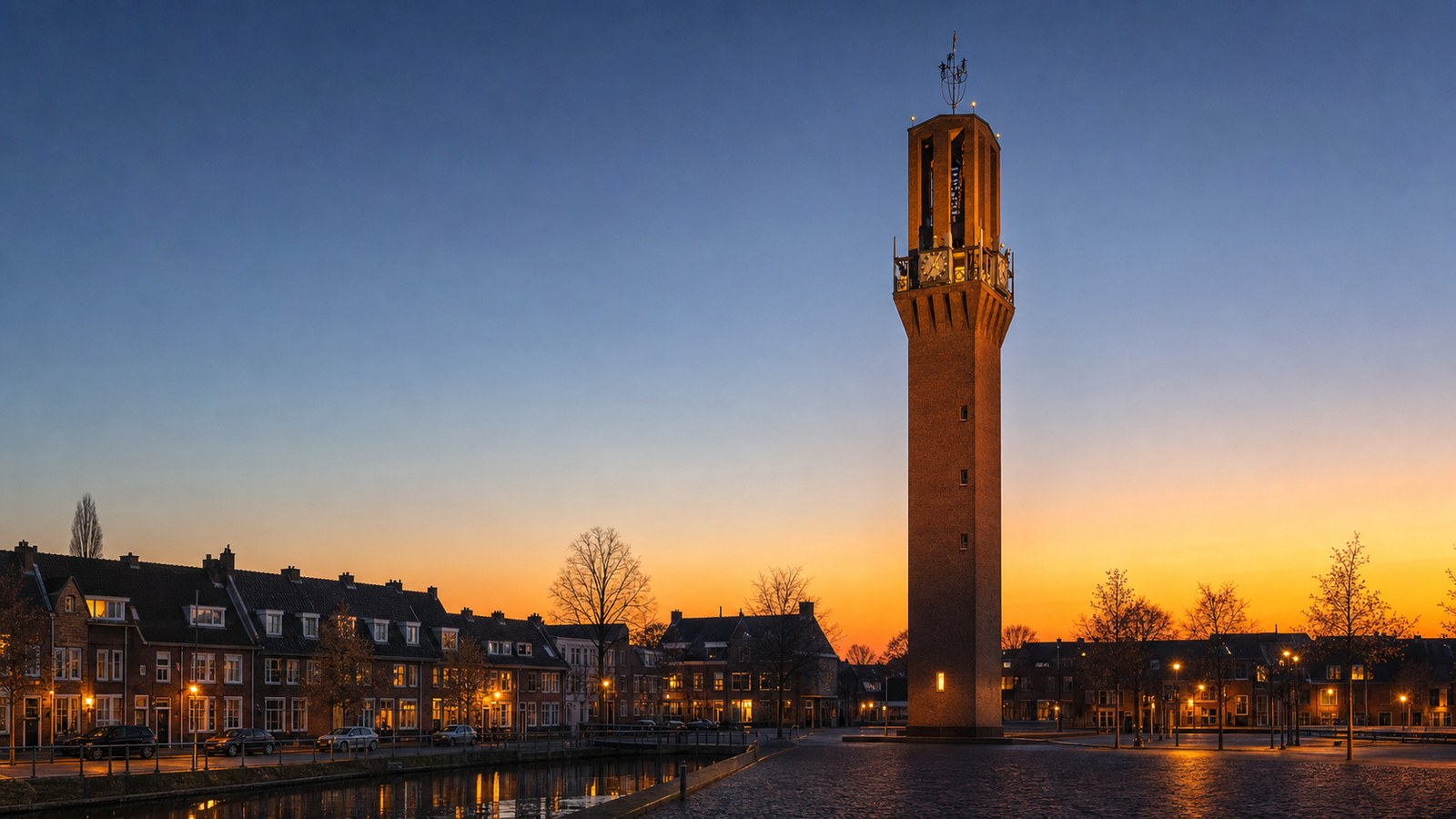
Hengelo is interesting. A city of around 84,000 inhabitants. Industrial past, future not yet certain. Large vacated industrial sites that ask for vision. A municipal council that has learned to listen to inhabitants — think of the discussion around Hart van Zuid. A civil-service organisation that reportedly is under pressure and in need of simplification.
More important: Twente as a region has a tradition of practical pragmatism. What takes three years in The Hague sometimes succeeds in Twente in six months. Borne, Hengelo, Enschede, Almelo — four municipalities that know each other, sometimes work together, and do not compete each other away.
Which Twente municipality ultimately takes the first step is a question for Twente itself. What I can offer is a design, a calculation, and a presence to answer every question.
Can this also work in companies
Yes. The architecture is not municipality-specific. It is a decision-making architecture for any organisation that wants transparent, traceable, reviewable decisions.
Three applications that are immediately possible:
Concerns with multiple business units
A holding with subsidiaries in different countries or sectors can run VMB-EGS as decision system between the top block (concern board), business-unit blocks, and project blocks. Snapshots at every decision, rollback at every error, reading confirmation for major investments. A board that now decides in dense fog over a subsidiary gets a register that captures everything.
Cooperatives and member organisations
A cooperative bank, a housing corporation, an agricultural cooperative, a trade union — all organisations where members formally vote but in practice the administrative layer does the actual work. Under VMB-EGS members get direct voice through blocks, with the same reading confirmation and the same Track. The administrative layer becomes smaller.
Family businesses across generations
In handover between generations an impasse often arises: father does not know how to hand over, son does not know how to take over, daughter is skipped. A family block with tracks, snapshots and rollback makes handover traceable and reversible. No inheritance disputes that last generations.
The software built for a municipality is, with adjustment of the settings file, usable for each of these three applications. One codebase, many applications. The revenue model for the builders of the software runs partly via business licences — which can partly carry the funding of the public variant.
This is not hypothetical, by the way. The same design that governs a municipality can govern a large building group, or a hospital, or a university. The logic is universal.
And who is dismissed
This is the difficult question. A municipality that goes from 900 to 350 FTE dismisses 550 people. That touches lives. It cannot be talked away.
Three honest points.
It does not happen in one year
The transition to VMB-EGS is gradual. On introduction, city administrators and council members shift to executing or substantive positions, or to retirement. Policy staff get a preferred period for reorientation. Estimate: five to seven years for a complete transition of a mid-sized municipality.
Those who stay do better work
The care consultant, the youth worker, the permit officer, the enforcement officer, the counter worker — they stay. Better: they are relieved of the meeting factory now running above them. What they always wanted to do — sit at the kitchen table, stand in the street, process an application — becomes their main work instead of a residual activity.
Those who go, go to real work
A council member is not a full-time function but a side function — they have income elsewhere. A deputy mayor is usually part of a political career with multiple positions. A policy officer has knowledge that in the market — care, education, energy, spatial planning — is scarce and welcome. The execution organisations (UWV, municipal institutions, healthcare organisations) have large vacancies for people with administrative experience.
The question is not whether people can shift. They can. The question is whether the policy guiding the shift is careful. A social plan, a guidance trajectory, a retraining arrangement — these are standard instruments in Dutch labour relations.
And yet: yes, it disturbs some. A political party that loses its local power base will resist. A deputy mayor who sees his career path threatened will hesitate. A municipal secretary who loses his top position will doubt. An advisory bureau serving the municipal market will lobby against the change. That is no conspiracy. That is normal human behaviour.
What I offer
I am the designer of VMB-EGS. I can explain, demonstrate, answer in any meeting. I have the screens, the flow diagrams, the data dictionaries, the ten-municipality calculation, the block architecture ready. No bureau, no consultancy. One person with a design that is ready.
What I need:
- A conversation with one to three council members or administrators
- Then possibly a conversation with the municipal secretary
- Then a formal exploration, with a report within three months
- Then the pilot of the Selection block in one concrete process
No conditions in advance. No contract. No exclusivity. The Twente municipality that takes the first step is free to decide, at any moment, on any condition.