BOOK TWO
The Kosaris
Diakrisis — the book of discernment
Forty-four tales in twelve parts
CHRONESIS · PHILOTIMOS · ALETHERIS · TIMARIS
BOOK TWO
Diakrisis — the book of discernment
Forty-four tales in twelve parts
CHRONESIS · PHILOTIMOS · ALETHERIS · TIMARIS
Who bears the Four pillars,
is borne by the Four pillars.
But the ground on which they stand,
must be checked.
This is the second book of the Kosaris. The first book is the book of the holy Kosus, and it is about four things: time, love, truth, and respect. Whoever has not read that book can read this one, but misses what it rests upon.
Book One tells how the four pillars were found. This book is about what happened afterwards.
For something happened that no one had foreseen. The book was read. It was read aloud in a thousand houses, copied and translated, and the sentences Demira had spoken at a counter while she stood buried in flour up to her elbows became regulations.
Nothing was lost. Every word remained as it had stood.
Only no one checked anymore whether it still held true.
This book is about the distinction between what is established and what is assumed, and about the willingness to make that distinction against oneself as well. In this book, that is called Diakrisis. It is not a fifth pillar. It is what you do before you begin to bear: you see whether the ground will hold.
The tales do not end with “Kosus says.” Kosus is dead and says nothing more. They end with a question, and with four words.
Those four words are the most difficult part of this entire book. They are not there to acquit anyone. They are there because it is true, and because that makes the matter worse.
———
And no one had lied.
Part I
In which the book of Kosus is read throughout Europe, and Klytia hears her own words again as a precept.
Tale 1
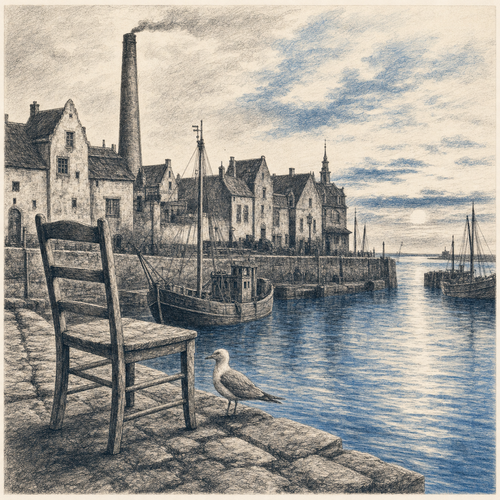
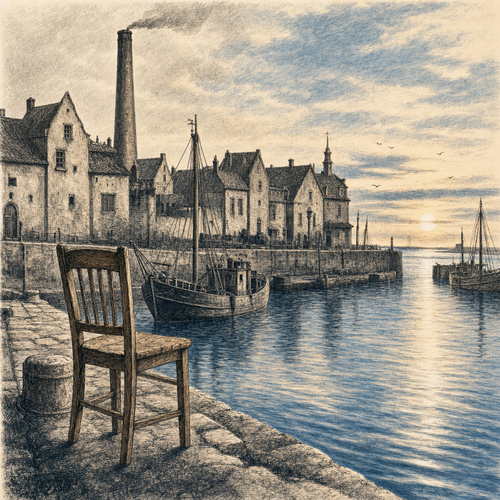
There stood a chair on the quay where Kosus had sat. No one had decided that it should remain there. It stood there, and people left it standing.
The harbourmaster wiped it down every morning. At first he did so because he could not bear to see seabirds had passed over it. Later he did so because it was what he always did.
Anthea saw him at work when she was forty. She stood by the nets and watched him draw the cloth over the seat, three times, always three times, and then snap the cloth against the quay wall.
"Why do you do that?" she asked.
He looked up. "Because it must be done."
"By whom?"
He thought. He thought longer than the question deserved, and he noticed that himself.
"I don't know," he said at last. "I've been doing it for eleven years."
Anthea nodded and walked on. She did not think of the chair again that day. But seven years later, when something had gone wrong that no one could have foreseen, she thought back to it, and then she knew that was where it had begun.
Not with a lie. With a man doing something good and no longer knowing why.
What do you do every day because it must be done?
And no one had lied.
Tale 2
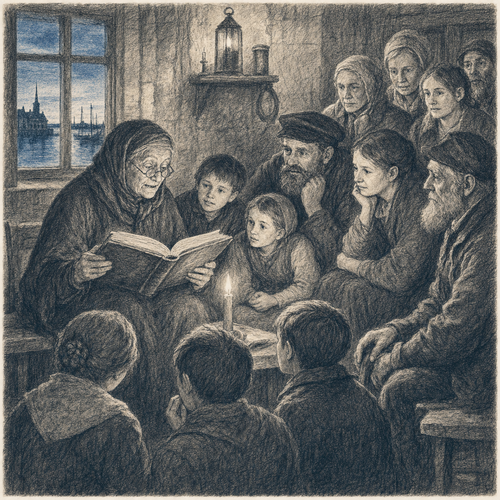
Klytia was old. She still walked, but not far, and on Thursday evenings she went to the widow's house on Salt Street because they read aloud there.
There were fourteen of them that evening. A young man read. He read well, calmly, and let silences fall where silences belonged.
He read the tale of the sack of flour. Klytia knew it. She had been there when Demira told it to Kosus, at the counter, with flour on her arms up to the elbows.
The young man read: "What is right on paper but not on the scales is not right."
A murmur of assent passed through the room. Someone nodded slowly. A woman said softly: "That is how it is."
And Klytia sat there and felt something cold.
For that was not how it had sounded. When Demira said it, it had not been a law. It had been a woman who had lost three suppliers and found four new ones, and who had nearly been ruined by it that month. It was something that had happened to her, and she had written it down so that it need not happen to someone else.
Now it was a sentence people quoted.
Klytia said nothing. What could she say? The young man had done nothing wrong. He had read, word for word, what was written there.
On the way back she leaned on her stick and thought: it is still written there exactly as it was written. And it has become something else.
When does a sentence that is true become a sentence no one examines anymore?
And no one had lied.
Tale 3
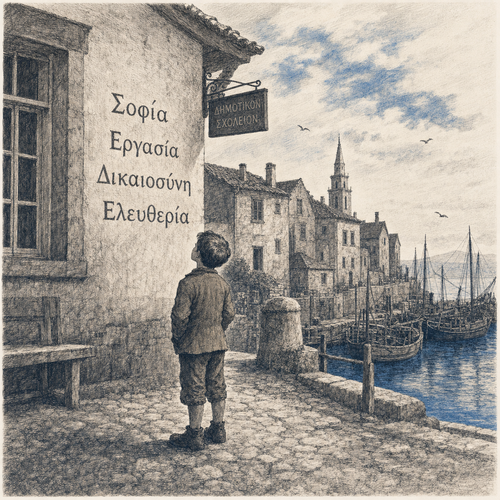
At the school on the quay, the four words hung on the wall. CHRONESIS. PHILOTIMOS. ALETHERIS. TIMARIS. They had been written by hand on a plank, and the plank had hung there so long that the wood had grown dark where the sun could not reach it.
The teacher asked the class what CHRONESIS meant.
Eleven hands went up. He pointed to one. The girl said: "Time that you give to another."
"Good," said the teacher.
At the back of the class sat an eight-year-old girl who had not raised her hand. Without raising it, she asked: "When was the last time you did that?"
The teacher looked at her.
The classroom remained silent. It remained silent for so long that the children grew uncomfortable and began to shift in their seats.
"Yesterday," the teacher said at last. "I think."
"You don't know?"
"No," he said. "I don't know."
He could have lied. No one would have noticed, and it would have saved the lesson. He did not, and that is why this tale was written down.
That evening he sat at his table for a long time. He knew all four words. He could explain them, spell them, and tell the tale they came from.
And he could not remember a single hour in the past month that he had given to someone without getting something in return.
Can you explain the word, or can you do it?
And no one had lied.
Part II
In which one begins to notice that the things taken for granted were once decided by someone, and sometimes by no one.
Tale 4
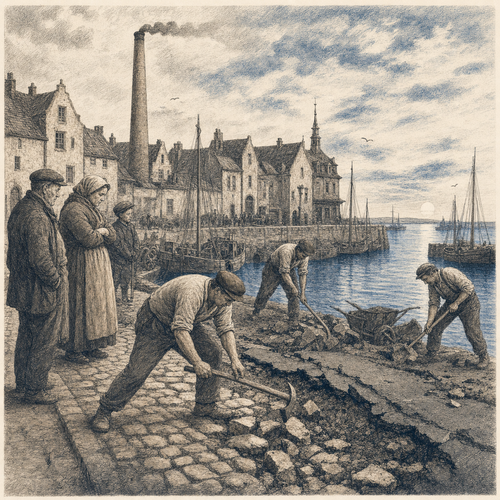
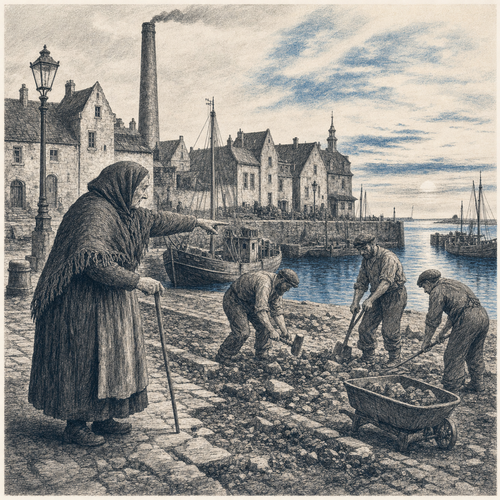
The road along the harbour was dug up. A crew came with machines, and they removed the black stuff and put new black stuff in its place.
A five-year-old boy watched. He watched for an entire afternoon.
In the evening he asked his father why a road is black.
"Because roads are black," said his father.
"Yes," said the boy. "But why?"
His father put down his newspaper. He was neither a stupid man nor an impatient man, and he realised that he did not know.
They asked the foreman. The foreman said it was called bitumen and that it came from crude oil.
"And why do people make roads out of it?"
"Because it sticks."
"Yes," said the boy. "But why?"
The foreman laughed and said he would have to ask someone who had studied. So they asked the engineer, and the engineer said that bitumen was what remained after the petrol and kerosene and diesel had been extracted from crude oil. What remained at the bottom of the boiler was bitumen.
"So it is what remains," said the father.
"Yes."
"And who decided that roads should be made from it?"
The engineer thought. "No one," he said at last. "It was there, and it stuck."
The father walked home with his son by the hand and said nothing the whole way.
He had walked that road for forty-six years.
How much of what you take for granted was never decided by anyone?
And no one had lied.
Tale 5
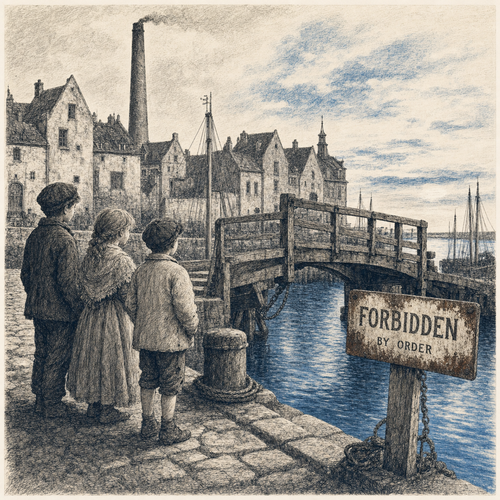
Behind the harbour stood a wooden bridge over the canal. There was a post with a sign, and the sign said that the bridge was not to be entered.
The sign was so old that the letters had turned brown. Everyone walked around. It took seven minutes to do so.
The eight-year-old girl walked across it one Tuesday.
She did not do it out of defiance. She did it because she was in a hurry and because she forgot that it was forbidden.
Nothing happened. The bridge did not even creak.
On the other side stood an old man fishing who had seen her cross. He said nothing, but watched her until she was out of sight.
The next day she asked the harbourmaster why the bridge was forbidden.
The harbourmaster looked it up. It took three days. In a cupboard in the attic of the town hall he found a decree from a year that no one mentioned any more. It said that the bridge had been closed because the third and fourth beams had been damaged.
Attached to the decree was an invoice. The beams had been replaced. Eleven months later.
The sign had remained.
"Thirty-six years," said the harbourmaster. He said it twice, as though it would be less the second time.
He worked it out on the back of the decree: if forty people walked around every day, seven minutes there and seven back, then in thirty-six years that sign had cost nearly thirty years of walking.
And there was nothing wrong with the bridge.
Which sign in your life is still standing while the beams have already been replaced?
And no one had lied.
Tale 6
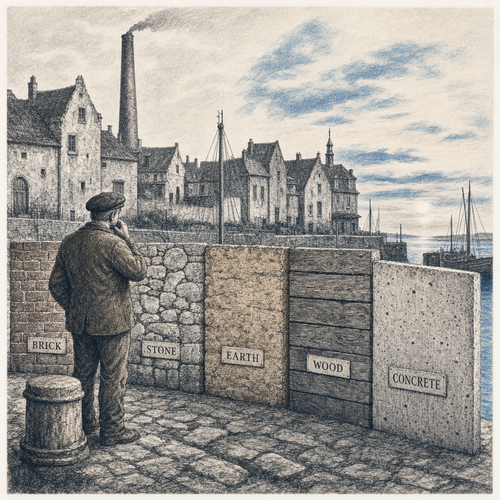
A well had to be drilled on the side of the village facing the fields, and it did not succeed.
At the meeting they listed what stood in the way. There were five things.
An old woman who had learned arithmetic from Klytia's grandfather sat at the back and listened. When everyone had finished speaking, she stood up and said that there were not five things standing in the way but five kinds of things, and that they should not be confused.
"The first is stone," she said. "There is rock beneath that field. There is no talking to it. You accept it."
"The second is paper. A permit is needed. That is not difficult, it is slow. Someone has to sit down and apply for it."
"The third is custom. People say that no one has ever drilled on that land. That is true. It is not a reason."
"The fourth we do not know. No one knows how deep the water lies. That is not a wall, it is a hole. That calls for a measurement."
"And the fifth," she said, "is that the owner of the land and the blacksmith have not spoken to each other for eleven years. That is the only one no one has mentioned tonight, and it is the only one holding back the well."
They fell silent.
The permit came through in six weeks. The measurement came in two days. The rock was indeed there, and they dug beside it.
The owner and the blacksmith shook hands in the third year, at a funeral.
The well was completed in the fourth year.
What kind of wall is the one you are running up against?
And no one had lied.
Tale 7
Across the bay lay a village where they pressed things. They pressed oil from seed, and what remained they called press cake.
In the village on this side, they called the same stuff waste.
It was the same substance. It came from the same press, from the same seed, in the same year.
Across the bay they fed it to the goats, and the goats gave milk. Here they drove it to the dump, and paid by the load to get rid of it.
Anthea discovered it through an invoice. She was in the clinic when a farmer came in with a torn hand, and while she bandaged him he complained about what he paid each year to have his waste taken away.
"What is it?" Anthea asked.
"Rubbish," said the farmer. "What remains."
"What does it consist of?"
He did not know.
They began weighing it and examining it, and it turned out to consist of nearly one-third protein.
Then the difficult part began. For in order to be allowed to feed it to goats, it could no longer be called waste, and in order for it no longer to be called waste, a paper was needed, and to obtain that paper someone had to prove that it was not waste.
That took two years.
The substance did not change by a gram in those two years.
Only the word changed, and when the word changed, everything changed.
How much of what you throw away has only the wrong name?
And no one had lied.
Tale 8
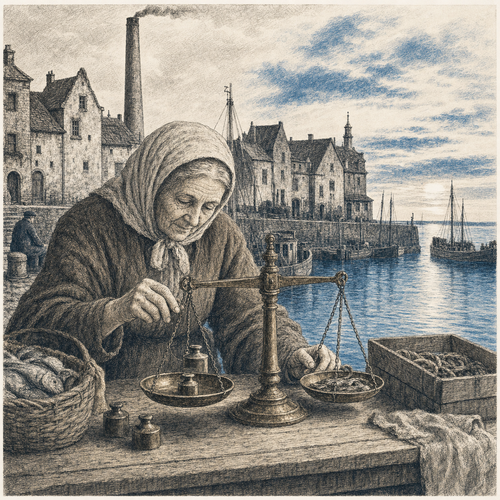
In the bakery by the harbour there still stood Demira's scales. They stood on the shelf to the right of the oven, and they were clean.
They were no longer used.
That was not out of carelessness. The cousin who had taken over the bakery was a precise man. For the first four years he had weighed the sacks, every sack, as was proper.
Then the supplier died and his daughter took over, and she was a woman who kept her affairs in order, and in nine years there had not been a single sack that was not right.
So he stopped weighing.
He had a good reason for it, and the reason was true.
What he did not know, and could not have known because he had not asked, was that for two years the daughter had no longer obtained her flour from the same mill.
Nothing went wrong. That is the vexing thing about this tale.
The flour was good, the bread was good, and no one was ever disadvantaged.
But when Anthea asked him why he no longer weighed, he said: "Because it is not necessary."
And when she asked how he knew that, his answer was nine years old.
Upon what does the trust rest that you no longer check?
And no one had lied.
Part III
Wherein good work is done on an assignment that was wrongly set, and one learns that the fault rarely lies in the work.
Tale 9
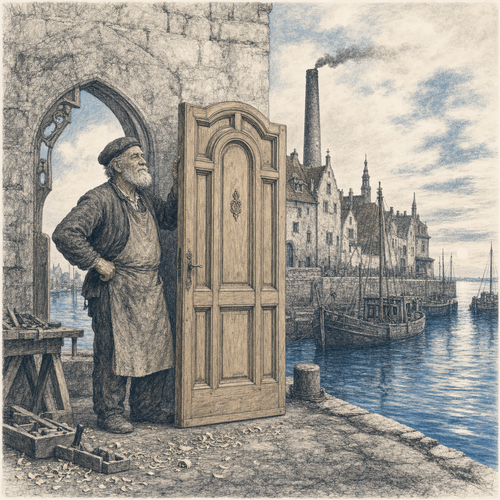
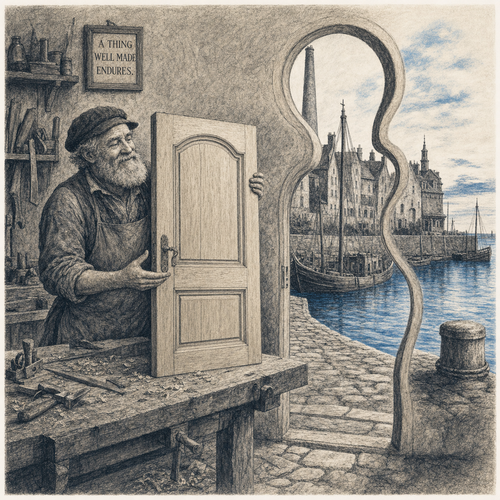
Alkion was eighty-two and his hands were still good.
He was asked to make a door for the new building on the quay where the nets would be stored. He asked for the measurements. They gave him the measurements on a note.
He worked on it for eleven weeks.
It was the most beautiful door he had ever made, and he knew it. The wood came from a single trunk. The joints were so tight that not even a knife would pass between them. He had finished the bottom sill at an angle so that rainwater would run off without seeping into the seam, and he had learned that from no one.
On the day he came to hang it, it did not fit.
There was an eleven-centimetre difference in height. The door had been made to the note, and the note had been made to the drawing, and the drawing was older than the foundation, because during construction they had set the building deeper on account of the water.
Everyone had done his work well. The mason had been right to go deeper. The man with the drawing had not needed to alter it, because nothing had been said to him about that. Alkion had made what was written there.
There was nothing wrong with the door.
He did not want to alter it. They offered to saw off the top, and he said no. He took it home and set it against the wall of his shed, and there it stood until he died.
When, three weeks before his death, he was sitting in the sun with Anthea, he said: "I worked eleven weeks on the answer. I gave no half-hour to the question."
How long do you work on the answer before rereading the question?
And no one had lied.
Tale 10
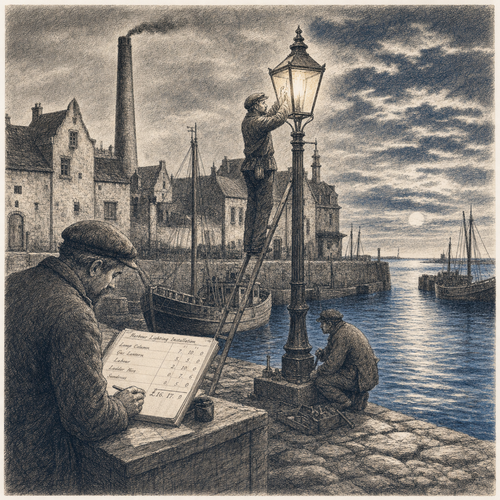
The harbour fund wanted to light the quay better, because at night someone had fallen into the water.
The first lamp cost little, and things immediately became much better. People could see where they were walking.
But a dark corner remained by the northern jetty, and so a second lamp was installed. It cost somewhat more, because a cable had to be laid.
A shadow remained behind the storage shed. Third lamp. Now digging had to be done.
And after the third lamp there was still a place where no one could see anything, and the fourth lamp would cost more than the first three together, because the line did not run there and there was rock.
The treasurer was a quiet man. He set the four amounts one below the other and looked at them.
"This is not right," he said.
"It is right," said the contractor. "I have recalculated it three times."
"I do not mean your account. I mean: if one step costs twice as much as the previous one, and the next one again, then we are doing the wrong thing."
They looked at him.
"We are lighting the quay," he said. "Why?"
"Because someone fell into the water."
"Where did he fall?"
No one knew. They looked into it. He had fallen by the third bollard on the south side, and there was light there. He had fallen because the bollard was loose.
The bollard was secured for almost nothing.
The fourth lamp never came.
What do your rising costs tell you about your question?
And no one had lied.
Tale 11
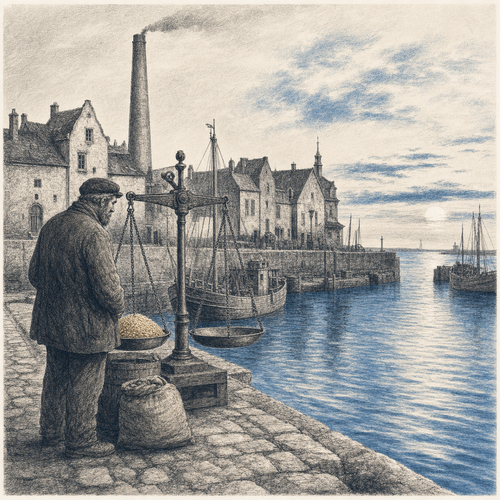
At the market stood a man with a balance, and he was honest. Everyone knew he was honest. He always let the customer watch the needle.
And yet something was not right, because the fishermen came off worse than the farmers, year after year.
Nikos, who was young and had only recently acquired a boat, went and watched him. He stood there for three market mornings.
On the third, he saw it.
The weigher put the fish in the left pan and the weights in the right. With the farmers, he put the vegetables in the right pan and the weights in the left. He did that because he stood on the right and it was easier to work that way.
The balance was not true. It was half an ounce out of balance, and had been for years, ever since it had fallen.
For the farmers, that worked to their advantage. For the fishermen, it worked to their disadvantage.
The weigher had not known. When they showed him, he went pale and sat down.
He had looked at the needle thousands of times, and the needle had told the truth thousands of times about what lay in the pans.
He had never looked at which pan was which.
Do you look at the needle, or at what lies in each pan?
And no one had lied.
Tale 12
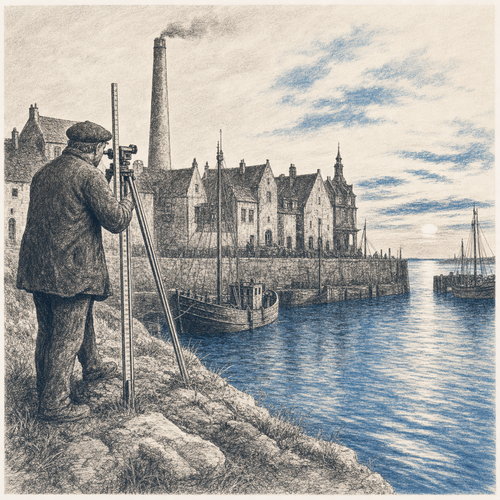
A surveyor came for the field behind the church, because they wanted to build something there.
He had good tools and took his time. He measured the field to the inch. He drew it out on large paper, with the angles in degrees and minutes, and one could see that he knew his trade.
He spent two days on it.
When he had finished, the eight-year-old girl came running across the field, straight through it, as children walk. She stopped beside his table and looked at the drawing.
"Where is the slope?" she asked.
The surveyor looked up.
"There is no slope."
"If I walk from there to here," she said, pointing, "I go downhill. If I walk back, I have to push with my legs."
He had not walked across it. He had stood where his tripod stood and looked through his telescope, and the telescope had told him everything he had asked it.
The field sloped downward. Not much. Enough to hold water after rain.
They did not build there.
Have you walked across it yourself?
And no one had lied.
Tale 13
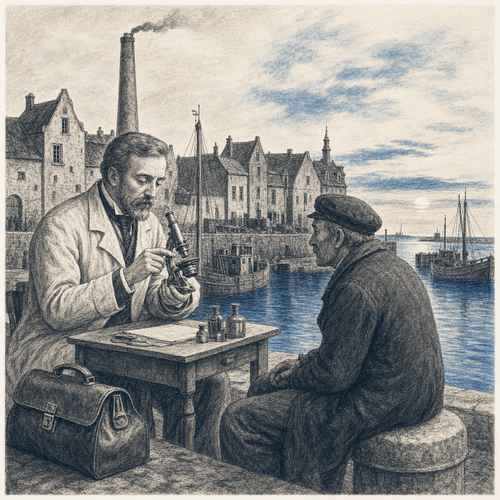
The mayor after Sofia was a good mayor. She kept the dashboard as she was supposed to and met her targets.
That year, all ten figures stood above the norm. It was the best year since they had begun keeping the figures.
And in that same year, nineteen young people left the village.
She looked into it. There had been seventeen the year before, and twenty the year before that. Nothing had changed.
She went through all ten targets and looked to see whether one of them ought to account for this.
Employment: there was work. Housing: there were homes. Education: good. Care: good. Safety, culture, cohesion: everything green.
At the meeting she said: "I have achieved everything we agreed to achieve. And the village is emptying out."
Someone said that perhaps the figures were wrong.
"The figures are right," she said. "I had them recalculated three times. That is precisely what is so troubling."
She went on thinking about it for two years. In the end she wrote one sentence about it in the report, and that sentence had more effect than all her figures:
If everything we measure is in good shape and things are going badly, then we are measuring the wrong thing.
What would be going wrong while all your figures remain good?
And no one had lied.
Part IV
In which one discovers that the small intervention gets one further than the great one, and that order matters more than strength.
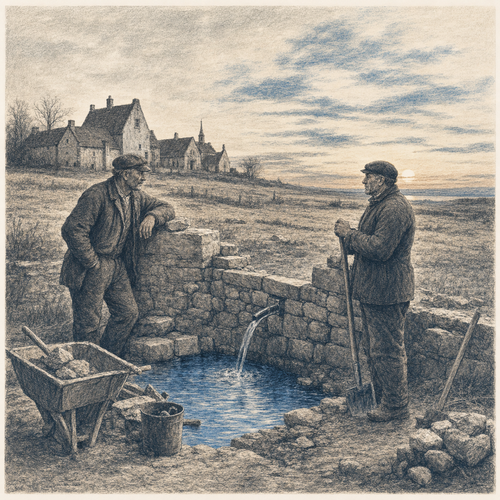
Tale 14
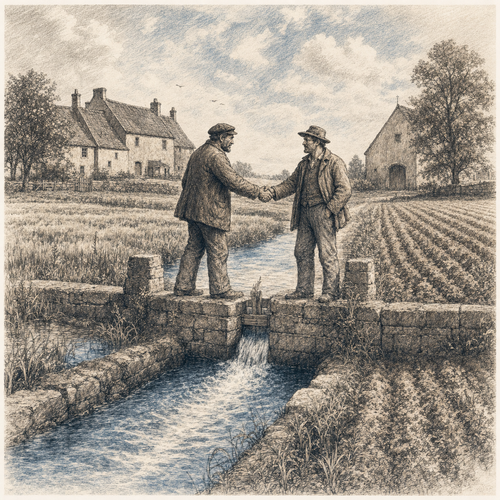
There was one spring and there were two fields, and the two farmers who worked them were brothers.
In alternate years, one received the water and the other did not. In the years when one of them did not receive the water, he harvested less than half. They had quarrelled over it for seventeen years, and both had grown poorer for it.
They had tried to deepen the spring. That gave no more water. They had tried to strike a second spring. There was no second spring. They had tried to divide the water half and half, and then neither of them harvested enough.
Theia was eleven. That summer she was with her uncle in the field, and she saw that the water was given in the afternoon, when it seemed most urgently needed.
She asked why.
"Because the ground is dry then."
"But it is also hottest then," she said.
They began giving it at night.
Almost nothing was lost to the air anymore. Enough remained for both fields.
It had cost nothing. It had taken seventeen years.
The elder brother later said that he had looked at the spring for seventeen years. Not once had he looked at the sky.
Are you seeking more water, or less evaporation?
And no one had lied.
Tale 15
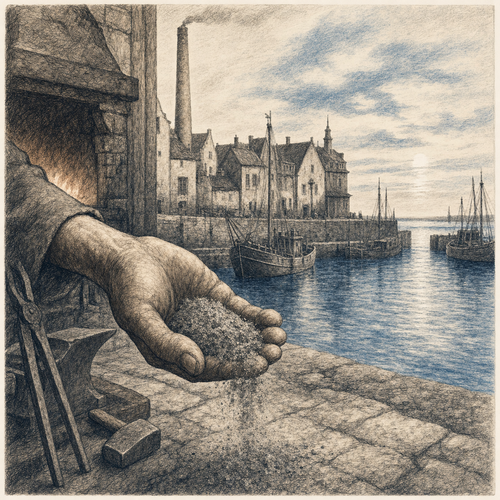
The blacksmith needed a mixture that could bear the floor of the forge and would not crack from the heat. Everything he tried cracked.
He made the mixture wetter. It cracked. He made it drier. It cracked differently. He brought different sand from another quarry and paid twice as much for it. It cracked.
He had been at it for four months, and in those four months he had poured the entire floor anew three times.
An old woman from the village, who knew nothing about floors but much about ovens, came to look. She sat on a stool in the doorway and said nothing for a long while.
Then she said: "Put ash in it."
"Ash?"
"A handful to a bucket. No more."
He thought it nonsense and did it anyway, because he was tired.
It did not crack.
She could not explain why. She only said that her mother had always done that with the oven floor, and that an oven also grew hot.
Later, someone looked into it, and there turned out to be a reason, and that reason filled three pages.
For four months the blacksmith had tried to change the whole mass.
What helped was something else, in a small quantity, well distributed.
Are you changing the whole, or the little that determines the whole?
And no one had lied.
Tale 16
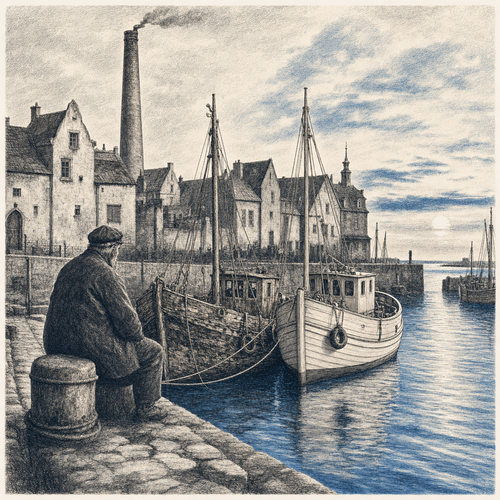
There were two boats in the harbour that had been built in the same year.
One was fast. She rode high, had little resistance, and with a good wind was at the banks before the other had cleared the piers.
The other was slow. She rode low and heavy, and she had been built with a solid foredeck that let the sea run over it instead of holding it back.
For eleven years the fast one won. For eleven years she earned more, and the owner of the slow one had to listen to it.
In the twelfth year, in October, a storm came that no one had expected, not even Alkion, and it lasted nineteen hours.
The fast boat did not return. The crew did; they were picked up.
The slow one lay at the quay the next morning with a torn sail and nothing else.
No lesson was drawn from it then, and no one said that it could have been known. For eleven years it had been sensible to build the fast one.
But when Nikos had his first boat built, he did not start from a good day.
They asked him why he built so heavily.
He said: "I am building for the nineteen hours."
Do you design for the good day or for the worst one?
And no one had lied.
Tale 17
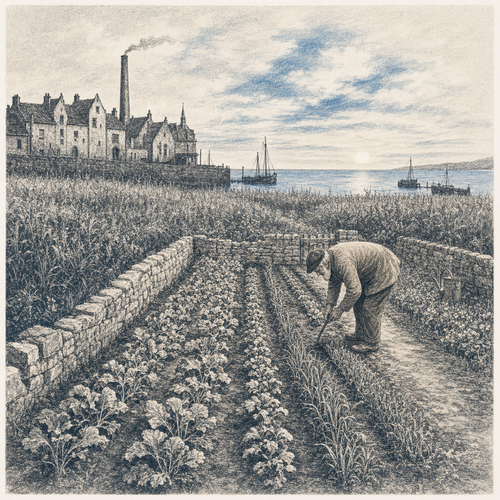
New seed came to the village. It promised much: a greater yield, less water, and that it would hold the soil in place.
The farmers wanted it at once. They had had a bad year behind them, and this was something to hold on to.
One of them, the oldest, sowed a single corner. Half a morgen of land, beyond the ditch, where the soil yielded little enough as it was.
They laughed at him. They said he was afraid.
The seed did well. It came up, stood tall, and held the soil in place as promised.
And in the third year a fungus appeared that was unknown here, and it entered this crop and never left it again.
The oldest farmer lost half a morgen of land.
The others lost their harvests and had to wait two years before the soil was clean again.
When they later asked him how he had known, he said that he had not known.
"I knew nothing," he said. "I only knew what it might cost if I was wrong."
What will it cost if you are wrong, and can you afford it?
And no one had lied.
Tale 18
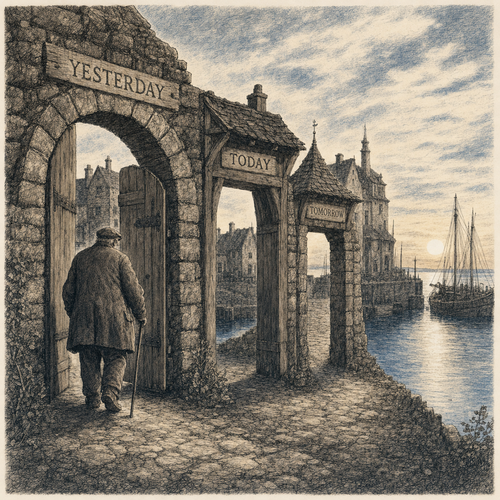
A new jetty had to be built on the southern side. Five things were needed before a single post could be driven into the ground.
They began with the first, because that seemed logical: first the ground, then the wood, then the permit, then the money, then the men.
They became stuck at the ground, because the owner had died and the inheritance was with a notary in the capital.
They waited seven months.
In those seven months nothing happened, because everything there was to do came, according to the list, only later.
Theia was thirteen then, and she sat in on it because her father was on the committee. She had seen the list and did not understand why they worked in that order.
"For which of the five do you need someone else?" she asked.
They worked it out. For the ground and for the permit they needed someone else. For the wood, the money, and the men they did not.
They bought the wood, gathered the money, and arranged the men, while the notary did what notaries do.
When the paper finally arrived, the wood was already dry beneath a tarpaulin.
Since then, that village has made two lists. On one is what they can do themselves. On the other is what they must wait for.
They always begin with the first list.
What on your list can you do today without anyone's permission?
And no one had lied.
Part V
In which one learns to write down what one does not know, and in which it becomes clear that admitting it is quicker than insisting on being right.
Tale 19
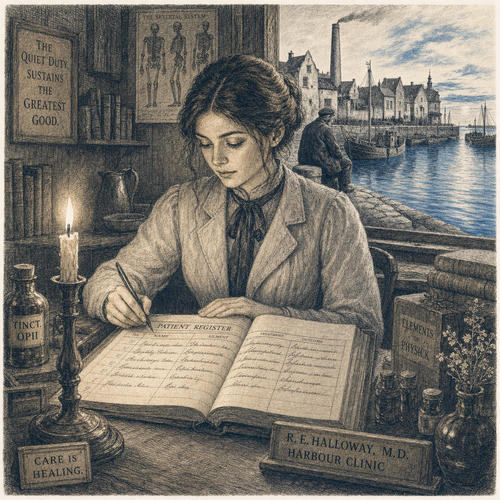
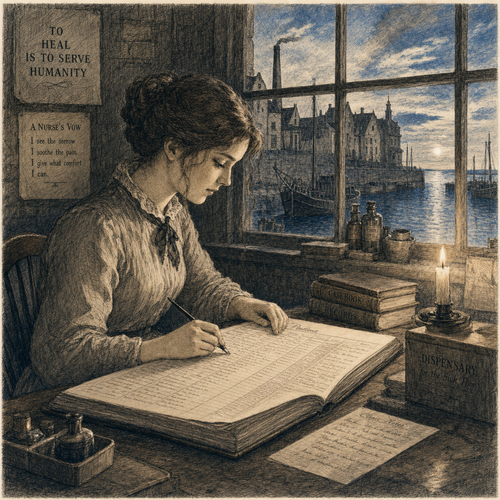
Anthea kept a book at the clinic. For each patient, she noted what had been done and what had been observed.
For an old fisherman with shortness of breath, she wrote down what she had measured, and then left a line blank.
The doctor saw it and asked what that empty line meant.
“There is something,” said Anthea. “I do not know what. He breathes differently from the others with the same condition. I cannot name it, so I do not write it down.”
“Then write down what you think.”
“No,” she said. “If I write down what I think, in ten years it will be there as something that has been established.”
The doctor thought it careless and left it that way.
Eleven years later, a young doctor came who went through the old books because something was happening in the village with the fishermen’s lungs, and she was looking for a pattern.
What she found were seven empty lines. Seven times, with seven different people, over fourteen years, Anthea had left a line open.
All seven had been fishermen. All seven had worked at the same shipyard.
If Anthea had written down what she thought, something different would have stood there seven times, and no one would have seen anything in it.
What one finds is not always what is written there. Sometimes it is what has been left open.
What do you not know, and do you dare write it down that way?
And no one had lied.
Tale 20
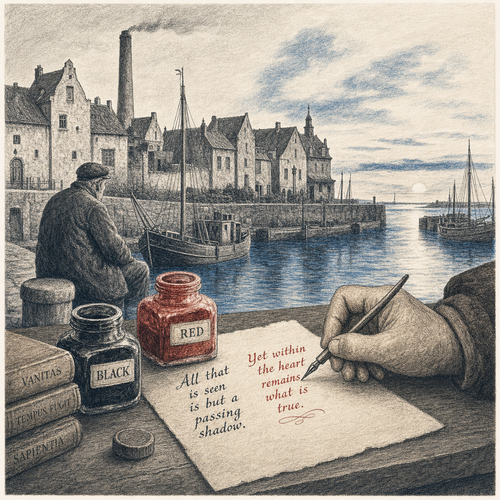
Demira's cousin, who ran the bakery, loved order. He had a book in which he kept track of everything concerning the flour: what it weighed, what it cost, where it came from.
Anthea saw that he had two inkwells standing there.
“Why two?”
“The black is what I have weighed,” he said. “The brown is what I have added up or inferred.”
She thought it excessive and said so.
He shrugged. His aunt had taught him, and he had never thought about it.
Four years later, there was a dispute with a supplier over a delivery from three years earlier. Two books lay on the table: the supplier’s and the baker’s.
Both books were correct. Both books gave a different figure.
They went through it. In the supplier’s book, all the figures were in the same ink, and no one could any longer say which had been weighed and which had been calculated.
In the baker’s book, the difference could be seen on a single page.
What had happened became clear in two minutes: once he had used an average instead of a weighing, and that stood in brown.
No one was reprimanded. They split the difference and carried on.
But ever since, the supplier had also begun working with two inkwells.
Can you tell in your own notes what was measured and what was inferred?
And no one had lied.
Tale 21
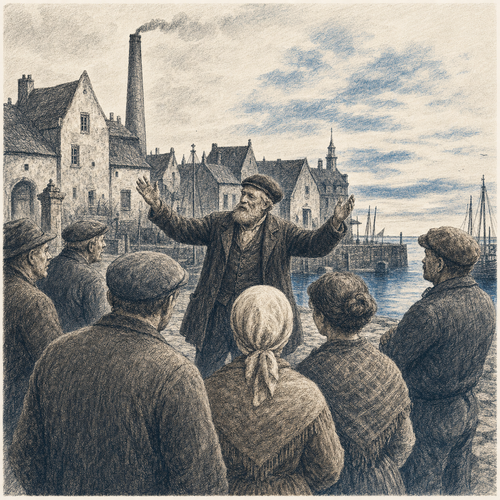
There was a man in the village who knew everything. That is putting it too strongly, but that was how people spoke of him.
Whenever he was asked something, he answered at once, and his answer was clear.
At a meeting about the sinking of the southern quay, he said it was caused by the weight of the stored goods.
Someone contradicted him. The storage had only been there for two years, and the quay had been sinking for longer.
He thought for a moment, then said it was caused by the current washing the sand away beneath the sheet-pile wall.
That sounded good. Better even than the first. People nodded.
Anthea was there and said nothing, but she went home with an uneasy feeling that she could not name until the following morning.
He had not said where his first answer had been wrong.
He had stepped from one answer to the other without touching the space between them, and in that space lay the only thing one could have learned.
She went to ask him. She went to him and did not ask whether he was right, but where his first answer had gone wrong.
He did not know.
It later turned out to have been water coming from the landward side, and that was something no one had mentioned because they had been looking toward the sea.
Two fine answers had both pointed in the wrong direction.
When someone contradicts you, do you give a new answer or look for the error?
And no one had lied.
Tale 22
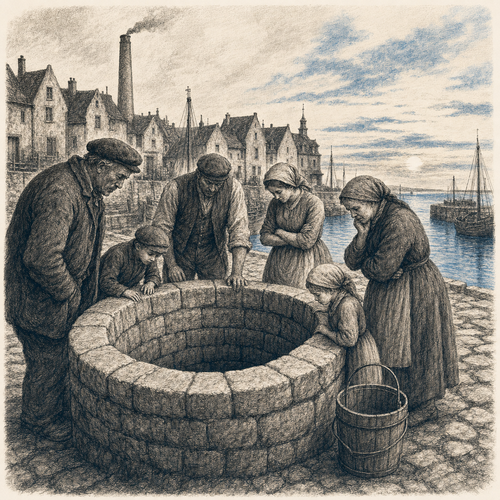
The well behind the school no longer gave water. It always had before.
People gathered. The first evening they spoke of the drought, because little rain had fallen, and they agreed on that.
The second evening they gathered because they had realised that the other wells were working. They spoke of the ground, of a shifting, of an old pipe. They did not agree and went home.
The third evening they gathered again and said more or less the same as on the second evening, in different words.
Theia was there on the third evening. She was fourteen then and was allowed to come because her mother was taking part in the discussion.
At the end of that evening she said, “We said this yesterday too.”
People looked at her.
“Yes,” someone said. “But we have not solved it yet.”
“No,” she said. “But nothing has been added since yesterday.”
The next morning she went there herself with a rope and a stone. She lowered the stone and counted.
There was water in it. Plenty.
The bucket chain had broken at five metres, and the end hung neatly straight down, so that from above no one could see anything.
Three evenings.
How many times have you already returned to the same answer?
And no one had lied.
Tale 23
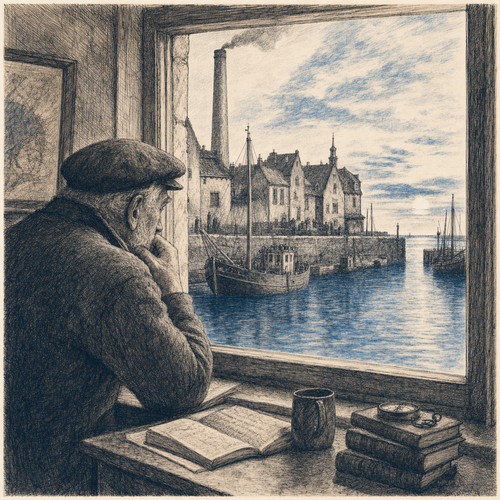
Theia was sixteen and had become a nuisance.
That was what people in the village thought, and it was not entirely untrue. She asked the same question about everything, and the question was: what would I notice if it were not so?
When someone said the catch was getting worse because there were too many boats, she asked it. When the schoolmaster said that children nowadays were less able to do arithmetic, she asked it.
Usually there was no answer.
That was the unpleasant part. Not that she was proved right, but that so often there was nothing there.
The schoolmaster grew angry about it, and said that not everything can be proved and that some things simply are as they are.
“That may be,” said Theia. “But then it is not a claim, it is a feeling. And you must call it that.”
There was one thing to which people did give an answer.
Alkion’s grandson said that the engines running on ethanol required less maintenance than the old ones, and when she asked him, he said: “If that is not so, then the boats are moored at the quay more often than before. That is recorded in the harbourmaster’s book.”
They looked it up. It was correct.
That was the only claim that held up that winter, and it was the only one that had said beforehand how it could fail.
What would you have to see to know that you were mistaken?
And no one had lied.
Part VI
In which the good that was built continues to turn while no one any longer knows why it was set up that way.
Tale 24
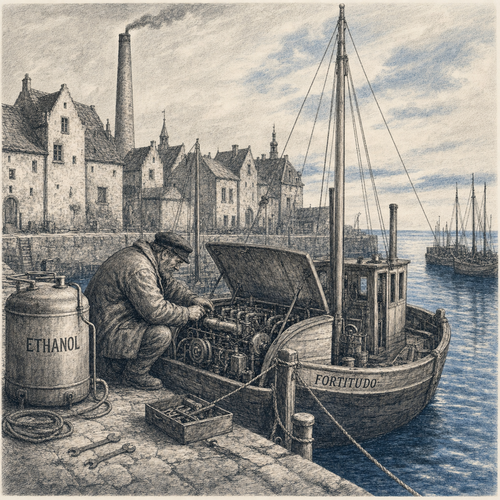
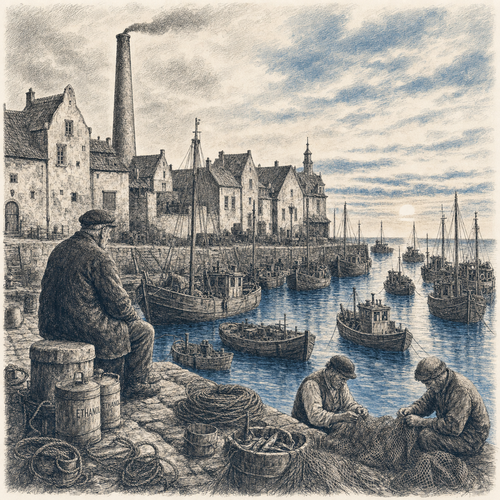
All fourteen boats ran on ethanol. It had been so since the time of Ruud, who came from Rotterdam and had installed the first engine at Alkion's.
Nikos was twenty-three and had his first boat of his own. He asked the harbourmaster why they ran on ethanol here and not on what the rest of the coast used.
The harbourmaster did not know exactly. He said it was cleaner.
Nikos asked the engine man. He said it was quieter.
He asked an old fisherman. He said it was cheaper.
All three answers were true, and none of the three was the answer.
The real answer stood in a book that lay in the cupboard of the harbour fund: they had switched because the fuel came from the south, from a region that had been desert fifteen years earlier, and because the harbour and that region held each other together through it.
It had not been a technical choice. It had been an alliance.
No one in the harbour knew that any longer.
And because no one knew, no one noticed when, two years later, fuel was offered that was cheaper and came from somewhere entirely different.
They accepted it. Why not? It was the same stuff.
Do you still know why you do what you do, or only that you do it?
And no one had lied.
Tale 25
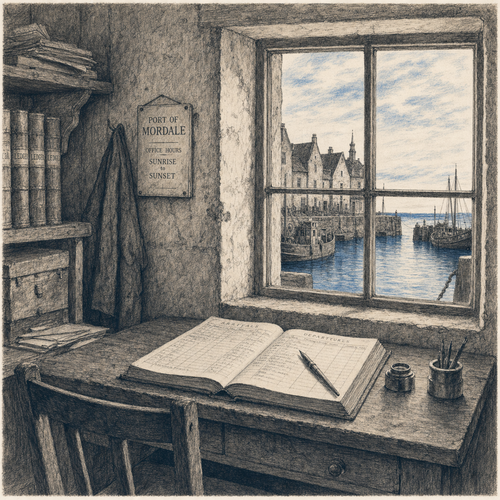
The harbour fund had existed for thirty-six years. It had bought back three boats and rented them to young fishermen who had no money.
It worked. There had never been any quarrel about it.
The rules had been written down on four pages by people who were all dead by then.
On page three it said that after ten years of renting, a boat became the property of the tenant, unless the fund decided otherwise.
That was how they had always done it.
What no one knew any longer was why those ten years were there. The figure came from the time when a boat was written off over ten years.
An ethanol-powered boat lasts twenty-five years.
So three boats had been given away that could have lasted another fifteen years, and there had been young fishermen who had not received a boat because the fund was empty.
When they worked this out, no one was angry. Everyone had done what was written there.
They changed the figure to eighteen years, and added where it came from and when it had to be reviewed again.
That last part was new. On the four old pages, no rule said when it had to be reviewed again.
Do your agreements say when they must be reviewed again?
And no one had lied.
Tale 26
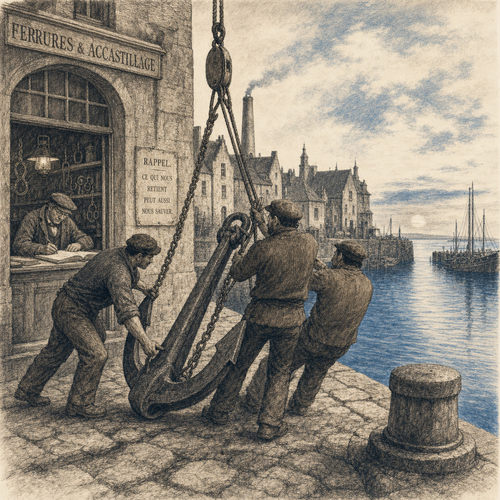
Alkion had once ordered an anchor from the blacksmith instead of having it brought in. It had cost three times as much, and he had never accounted for it.
His grandson found the bill again when he was clearing out the house.
He was an accountant, and he recalculated it because he wanted to know whether his grandfather had been foolish or not.
He added up what the extra had cost: the difference, and the interest over thirty years.
Then he added up what it had yielded. That was harder, because it was written down nowhere.
That year, the blacksmith had been able to keep his son employed. That son later made the fittings for the first ethanol engines, because there was no one else here who could do it. Without him, the engines would have had to come from the capital, and at the time they could not have afforded that.
He arrived at a figure so large that he did the calculation three times over.
When he showed it to Anthea, she said: “Don’t count that in.”
“Why not?”
“Because you could not have known it beforehand. Neither could he.”
“Then why did he do it?”
Anthea thought.
“Because he knew the blacksmith,” she said.
What do you pay three times over, and to whom?
And no one had lied.
Tale 27
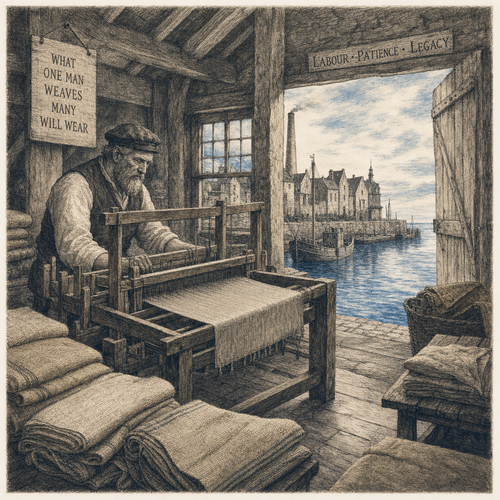
There were four weavers in the village. They supplied the market and two shops in the capital.
Everyone knew there was work for three.
No one said it.
They did not say it because it would have sounded cruel, and because no one wanted to say which of the four was one too many.
So they shared the work, and all four earned too little.
The youngest, who had the least, lasted two years. Then she left for the capital and never came back.
She was the best of the four.
All three of them knew that, and it is one of the few things that was never spoken of in that village.
Klytia mentioned it once, to Anthea, in the last year when she was still clear-minded.
“We were so afraid of hurting someone,” she said, “that we allowed the wrong one to leave.”
What truth do you refrain from speaking out of kindness?
And no one had lied.
Part VII
In which, in the south, people discover that for half a century they had looked at one product while there were four in the crop.
Tale 28
In the south, where there had been desert forty years before, the tall grass now grew in ten thousand places.
They harvested it, pressed it, made fuel from it, and that fuel went north.
That worked. Schools had arrived, and a doctor, and light in the houses.
Mamadou’s grandson was twenty-two, and he was the first in his family to have studied.
He returned to the village and asked one question that no one had asked.
"What else is in it?"
His uncle did not understand the question.
"We make fuel," he said. "That is what it is."
"That is what we make of it," said the boy. "I am asking what is in it."
They had it examined. It took half a year and cost money they would rather have spent on a pump.
There were four things in it.
There was sugar in it, and they made the fuel from that, and it was approximately a third.
There was a second kind of sugar in it, which they did nothing with.
There was a brown substance in it which they burned because they did not know what it was.
And there were protein and oil in the seed of the plant that grew among it.
For forty years they had used one of the four.
What do you make of your raw material, and what is in it?
And no one had lied.
Tale 29
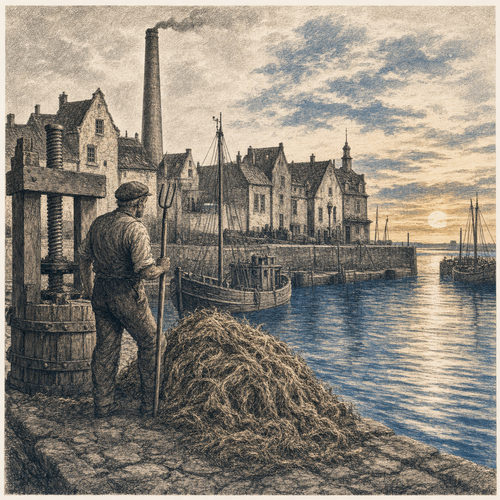
Beside the press lay a mountain. That mountain was called waste.
They carted it away. That cost money, and they had never thought otherwise, because it was waste, and waste is carted away.
The boy who had studied had the mountain weighed.
It was a strange request. No one weighs waste.
The mountain weighed more than what had come out of the press.
More than the product.
The four of them stood around it and said nothing for some time, because if you cart something away sixty-six times a year and it weighs more than what you sell, then something is fundamentally different from what you thought.
"We are not a fuel factory," the boy said at last.
"What are we, then?"
"We do not know. We have never looked."
They did nothing with it that year. They had neither the people nor the money for it.
But they stopped calling it waste, and that was the only thing they did that winter.
Two years later, someone from the north came to buy it.
Does what you throw away weigh more than what you sell?
And no one had lied.
Tale 30
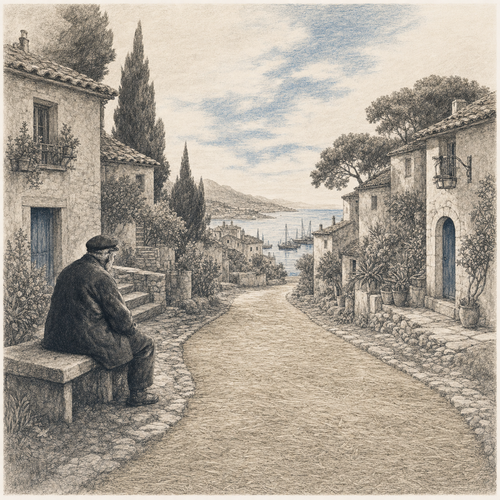
The first road that was not black lay between two villages in the south, and it was eleven kilometres long.
It was grey-brown, approximately the colour of wet clay when it dries.
It was made of stone and sand like all roads, but what held the stone together had come from the field.
The old men did not trust it.
They walked on it and stamped on it and said that a road ought to be black, and that a road that is not black is not a road.
They laughed at it and paid no heed, because the road was there and it held.
The children thought it nothing special.
That is the only thing that happens in this tale, and it is enough.
For the children who learned to ride bicycles on that road, a road was grey-brown, and black was something strange from another country.
There is no stronger way to change something than that.
It takes only a generation, and that is why almost no one tries.
What do the children find normal that you still find strange?
And no one had lied.
Part VIII
In which one discovers that a requirement comes from another climate and that the cheapest choice is the most expensive one.
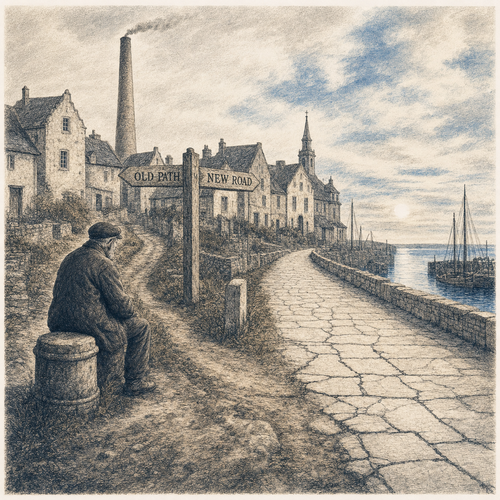
Tale 31
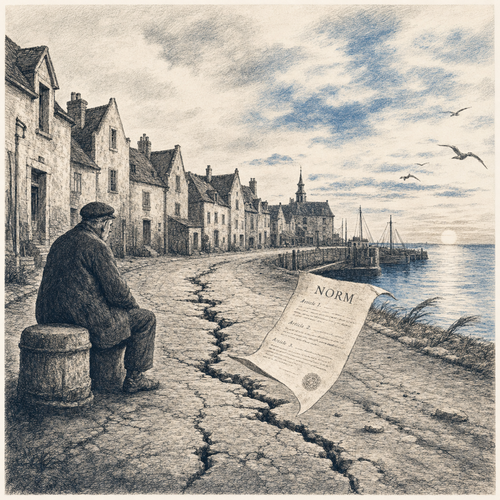
The road in the south was rejected.
An inspector came, carrying a book, and in that book it said that a road surface had to withstand a test at fifteen degrees below zero.
"It never freezes here," said the contractor.
"That is not what it says," said the inspector. "It says what it says."
He was right. He did his work as it ought to be done, and he was not an unreasonable man. He had not written the book.
They investigated where the book had come from. It had been drawn up in a country where it froze for four months of the year, and it had been adopted here because, when drawing up their own rules, they had sought a good example, and that was the best there was.
That had happened twenty-two years before.
There was also another book, written for roads in warm regions with little traffic, and that book lay in the same cabinet.
No one had ever opened it, because it was thinner.
It took four years before the requirement was adjusted.
In those four years, forty-eight kilometres of road were not built in that area, though they could have been there.
No one had lied. There was not even anyone who disagreed.
What climate does the standard by which you are measured come from?
And no one had lied.
Tale 32
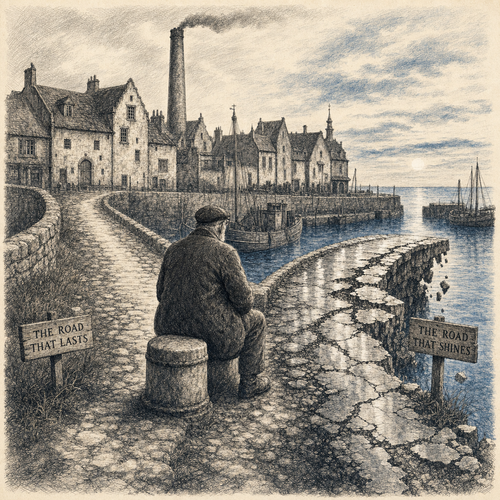
Two villages built the same road in the same year, of equal length and equal width, and it cost both of them the same.
In one village, the binding agent came from across the sea. It was paid for, and the money went away.
In the other, it came from the field behind the village. It was paid for, and the money stayed.
In the municipal books, the same amount stood beside both.
The provincial accountant laid the two files side by side and said that the villages had performed comparably.
That was true according to his books.
Anthea was at that meeting because the clinic fell under the same budget.
She said: "In the second village, eleven people worked that summer."
"That is not included here," said the accountant.
"No," she said. "That is why I am saying it."
He was not ill-disposed. He searched through his papers and searched for a long time, and then he honestly said that in his entire model there was no place where that difference could be entered.
It was neither an expense nor a return.
It was simply there.
What happens in your village that finds its way into none of the books?
And no one had lied.
Tale 33
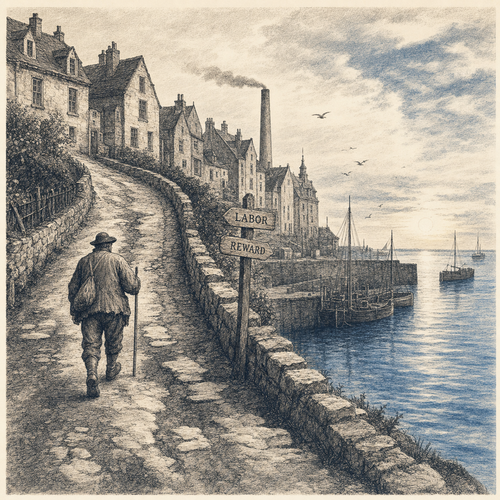
A road had to be built to the higher-lying fields.
There were two possibilities. One cost less to build and had to be repaired every three years. The other cost half again as much to build and lasted fifteen years.
Over fifteen years, the second was cheaper. Not by a little.
Everyone knew that. The supervisor knew it, the alderman knew it, and the contractor knew it best of all, because he had built both.
They chose the first.
Not out of stupidity. The construction budget and the maintenance budget were two separate pots, and they had two different managers, and the man who chose paid only from the first pot.
The maintenance pot was someone else’s problem, three years from then.
When Theia heard this, she was seventeen, and it angered her more than people were used to seeing.
She wanted to know who was to blame.
Anthea told her that no one was to blame, and that this was the worst part.
"Then there is nothing to be done?"
"Yes, there is," said Anthea. "But not with a better road. With another pot."
Is your choice determined by what is good, or by which pot it comes from?
And no one had lied.
Part IX
In which well-regulated governance does not see precisely what it does not measure.
Tale 34
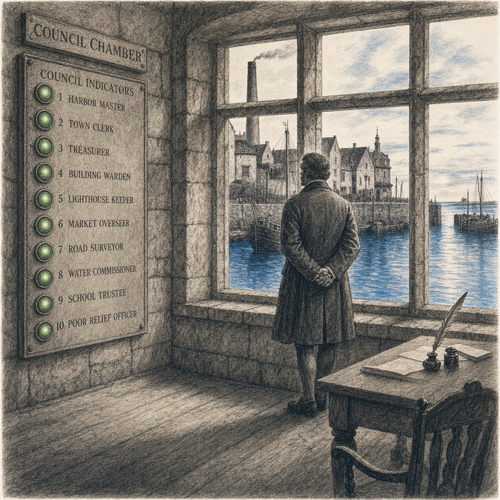
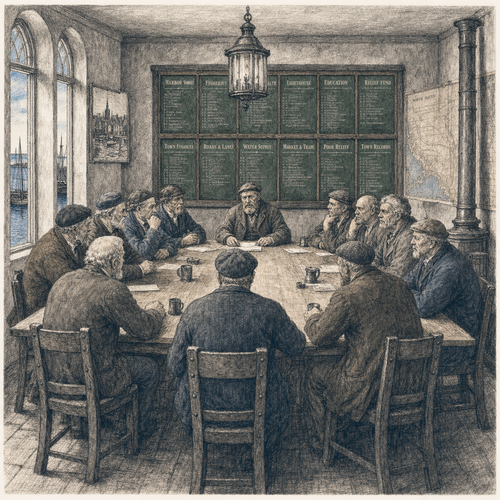
The village had ten goals and a dashboard every quarter, and it had worked that way for nearly forty years.
The year Theia turned nineteen, all ten goals were green.
She left.
She went to the capital, like nineteen others that year, and did not return until she was twenty-eight.
When she returned, she went to the mayor and asked why there was no eleventh goal.
"For what?"
"For those who leave."
The mayor said that could not be measured, because people were free to go wherever they wished and it was not the municipality’s place to count that.
"You count who comes," said Theia. "That is listed under housing."
The mayor had no answer to that.
An eleventh figure was added. It was the first figure to stand at red, and it remained red for eleven years.
Those eleven years of red changed more than the ten green ones combined.
What do you not count because you are not allowed to count it?
And no one had lied.
Tale 35
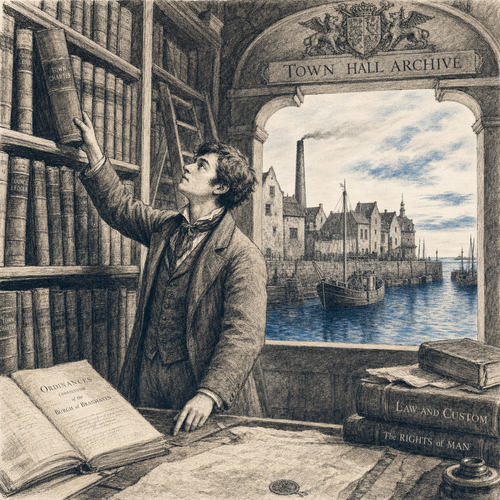
In that village, ordinary rules lapsed after five years and important ones after ten. It had been designed that way so that no one would be governed by a decision no one understood anymore.
It worked. Every year, all sorts of things lapsed, and people looked at them and kept what they wanted to keep.
There was one rule that had never lapsed.
It was the rule that said rules lapse.
It was not stated there, because no one had thought of it. It had been written down in the first year and had never gone before the citizens’ council.
When someone discovered this, there was a brief panic, for did this mean that everything was invalid?
It did not, and a jurist explained that on a single page.
But the question that lingered was more uncomfortable.
For forty years, every rule had been reviewed except the most important one.
They had used the instrument on everything except the instrument itself.
Which of your rules has never passed through your own rules?
And no one had lied.
Tale 36
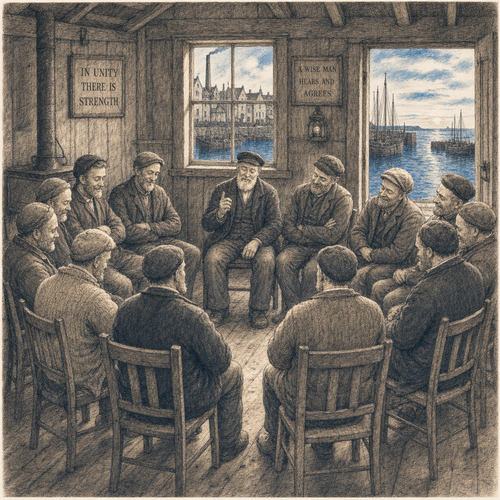
The citizens’ council was formed by lot: twelve people, a new set each year.
In the year Theia turned twenty-one, there was a council that worked well. They were quick, thorough, and agreed on almost everything.
People praised them.
Anthea, who still worked half a day at the clinic then, looked over the list of names because she knew one of them.
Ten of the twelve lived within four hundred metres of the quay.
It was not deliberate. The drawing of lots had been fair. But the lots had been drawn from the list of people who had made themselves available, and the person who makes themselves available is the one who has time, and the one who has time is the one who lives close to the town hall and has no land to cultivate.
That year, the council had taken three decisions concerning the hinterland.
All three had been adopted unanimously.
No one who lived there had sat on it.
Why does your group agree so quickly?
And no one had lied.
Part X
In which everyone bears the Four pillars and yet things go wrong, because beneath everything lay one assumption that no one checked anymore.
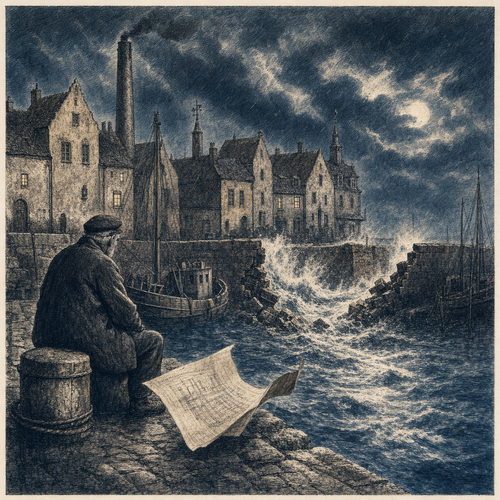
Tale 37
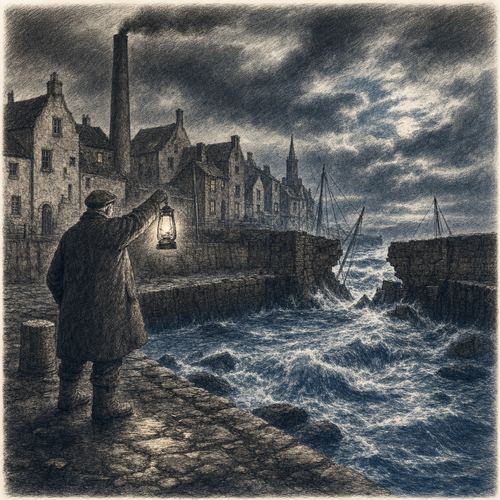
On the night of the seventeenth of October, the northern dam wall gave way.
It was not a storm. The wind blew, nothing more. The sea stood high, but no higher than it does four times a year.
At ten past two that night, the wall gave way along a length of forty metres, and the water flowed into the low-lying streets.
No one drowned. That was a great piece of good fortune, and it could have ended otherwise.
The harbour master was at the quay within seven minutes. The bells rang within twelve. The fishermen rose from their beds, and that night they brought sixty-three people out of the low-lying houses.
Anthea was sixty, and from two in the morning until eleven in the morning she stood in the school building.
That night, there was no one who failed to do what they could.
There was no one who withheld anything.
There was no one who looked to themselves.
People later said that it had been the most beautiful night the village had ever known, and that is a terrible sentence, but it is true.
And the next morning, when the water receded, everyone stood on the quay looking at the gap, and no one understood it.
For nothing had happened.
What breaks while everyone does their duty?
And no one had lied.
Tale 38
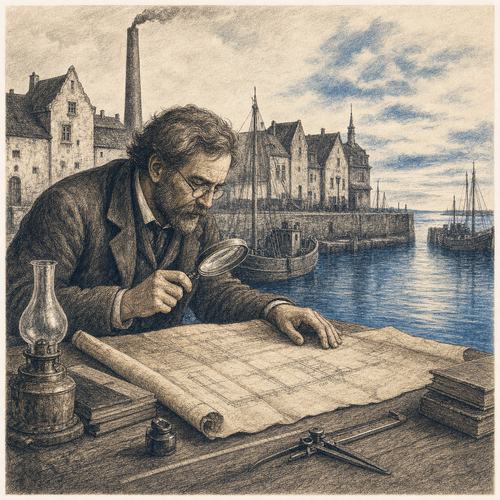
An inquiry was launched, and it lasted five months.
They looked at the maintenance. The maintenance was in order. Inspections had been carried out as they should be, every year, and the reports were there.
They looked at the contractor. The contractor had delivered what had been ordered.
They looked at the administration. The administration had paid what was needed, every year, without cutting corners.
They looked at the inspector. He had measured what had to be measured, and he had measured it correctly.
Four people had done their work, and the wall had fallen.
Then they went back in time, and that was the most difficult part of the inquiry, because they had to open cabinets that had been closed for thirty-two years.
The inspection regulations required the wall to be measured at four points.
Those four points had been chosen thirty-two years earlier. They had been well chosen, because they lay where the wall was under the greatest strain at the time.
In the nine years that followed, the shipping channel was rerouted.
As a result, the current shifted, and the greatest strain moved to a point one hundred and twenty metres farther away.
They continued measuring at the four points.
Twenty-two years of good measurements in the wrong place.
No one had lied.
Where are your four measuring points, and when were they chosen?
And no one had lied.
Tale 39
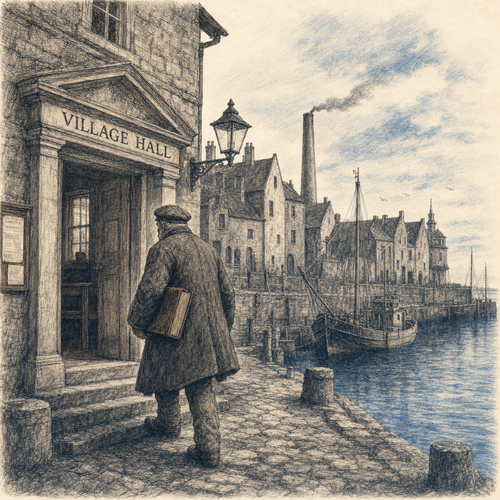
When the inquiry was finished, an old man came with a book.
It was an old book, with a broken spine, and he said it had belonged to his father.
It was one of the first copies of the book of Kosus, from the time when it was still copied out by hand.
He opened it to a tale and read it aloud.
It was about a woman who baked bread and who one day discovered that there was too little flour in her sacks, and who thereafter weighed every sack.
Everyone in the hall knew the tale. They knew it by heart.
When he had finished reading, he said: "There is something else."
And he read the last line, which no one had ever quoted because it is not a beautiful line:
And she also weighed the sacks from the new supplier.
A sound passed through the hall.
For that is the whole matter. She did not stop weighing when she had a supplier who was sound.
It had stood there for thirty-two years. They had read it aloud a thousand times.
They had remembered the first half.
Which last line of your own book do you leave out?
And no one had lied.
Part XI
In which it becomes clear that one cannot write down the distinction, but can only demonstrate it.
Tale 40
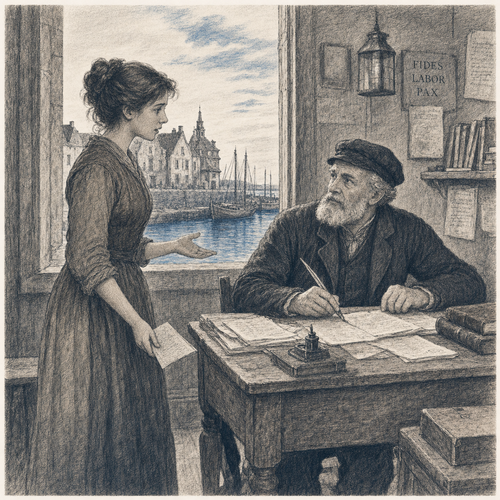
Theia was twenty-two then, and she worked at the harbour treasury.
After the bulkhead, she came to Anthea’s door in the evening, and she was angry.
"You knew," she said.
"No," said Anthea.
"You did know. You have spent your whole life examining the things others did not examine. Why did you not examine the bulkhead?"
Anthea let her in and made tea, and then she sat down and told her honestly.
"Because I was looking at the clinic. And at the flour. And at the bridge. And not at the wall."
"Then it doesn’t work."
"No," said Anthea. "It does not work the way you think it works. It is not a sieve that catches everything. It is one person looking in one place."
Theia said nothing.
"That is why there must be many of them," said Anthea. "That is the only answer I have, and it is a meagre answer."
Theia left late that evening.
The following week she began going through the harbour treasury, from front to back, and it took her three years.
She found seven things there.
Anthea lived to see four of them.
Which place are you looking at, and who is looking at the other one?
And no one had lied.
Tale 41
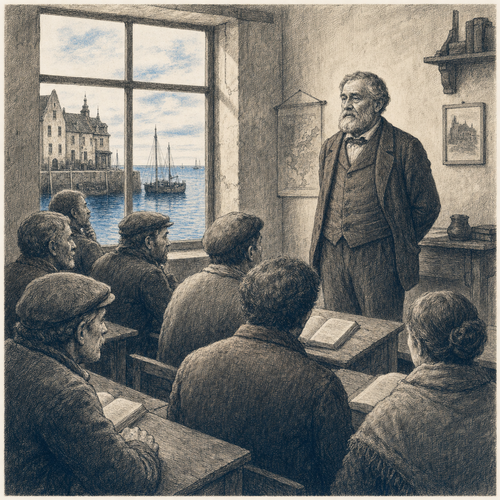
They wanted to teach it.
That was well meant. After the bulkhead, people decided that the children had to learn this, and they made a lesson.
The lesson was called The Distinction, and it lasted an hour a week.
There were rules on the board. What do you know. What do you assume. Where does the number come from. What would tell you that it is not so.
The children learned it by heart and they could recite it.
They did well on the test. Forty-six of the fifty-two passed.
And in the playground they still believed everything the biggest boy said.
The teacher saw it and became disheartened.
He went to Theia, who was thirty then, and asked what he was doing wrong.
She came and sat in his class for an afternoon. She said nothing and watched.
At the end she said: "You said seventeen things this afternoon. Not once did you say where you got any of them from."
"I am the teacher."
"Yes," she said.
He began doing it. With every assertion he made, he added how he knew it, and sometimes he said that he did not know.
At first, that cost him half his authority.
After two years, the children began asking one another.
Will you add how you know?
And no one had lied.
Tale 42
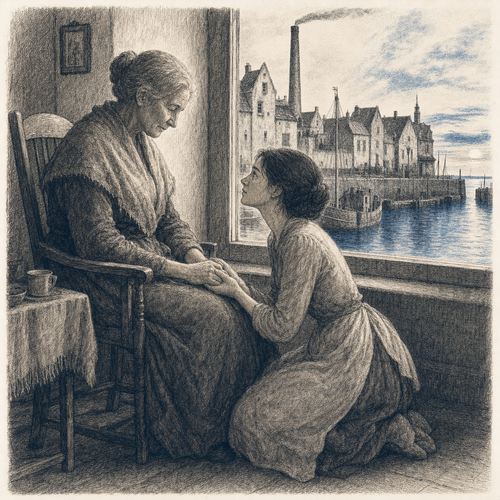
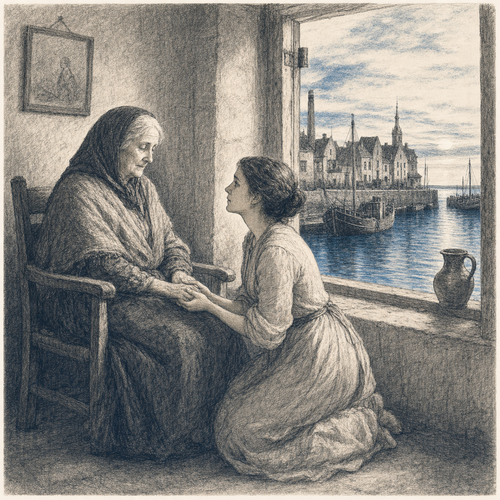
Anthea grew old. She left the clinic at seventy-two, and afterwards she spent much time by the window.
She saw the quay and she saw the new bulkhead, which was measured at seven points, with the book stating when those seven points had to be chosen again.
When she was young, she had written fourteen pages about her grandmother and the old man, and those pages still lay in a drawer.
She took them out and read them.
She did not think they were good. She thought them too certain.
She did not change a thing.
At the bottom of the last page she added one sentence, in handwriting that trembled, fifty-two years after the first.
I wrote this down when I thought I understood it.
And beneath it, the date.
That was the only time Anthea had neither crossed anything out nor thrown anything away, but had gone and stood beside it.
Those fourteen pages, with that one sentence beneath them, became the beginning of the third book.
What did you write down when you thought you understood it?
And no one had lied.
Part XII
In which distinction proves not to be a doctrine but a habit, and in which it is passed on to someone who did not ask for it.
Tale 43
A man came from the north who had read the book and had a proposal.
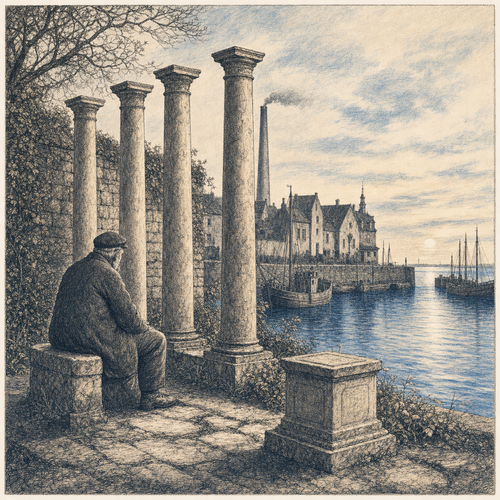
He spoke well and had thought it through. He said there ought to be a fifth pillar, and he had thought of a name for it.
He said that the four pillars had proved insufficient, because on the night of the seventeenth all four had stood upright and yet the wall had fallen.
There were many people in the hall that evening, and many thought he was right.
Theia was forty-six then. She let him finish.
Then she said: "What does your fifth pillar stand on?"
He did not understand the question at once.
"A pillar stands beside the other," she said. "Four pillars bear a roof. What does yours bear?"
"The same roof."
"No," she said. "What you describe is not a pillar. It is what lies beneath the floor. It is what you do before you begin to bear weight. You see whether the ground will hold it."
The man said that it was nevertheless a fifth thing and that it might therefore be given a name.
"A name, yes," said Theia. "But no place in the row. Put it in the row and people will recite it like the other four, and in twenty years it will be a word on a plank."
It was not put in the row.
It is in this book and nowhere on a wall.
Does it bear it, or does it lie beneath it?
And no one had lied.
Tale 44
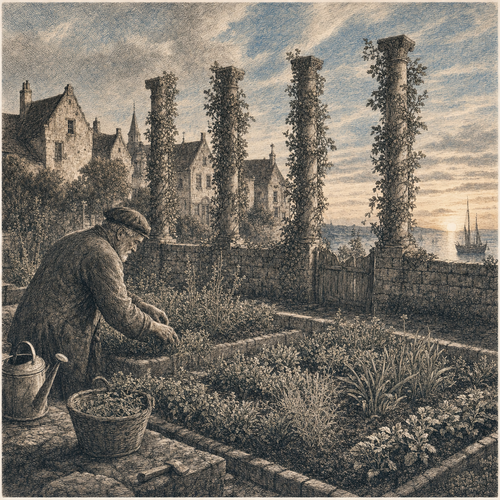
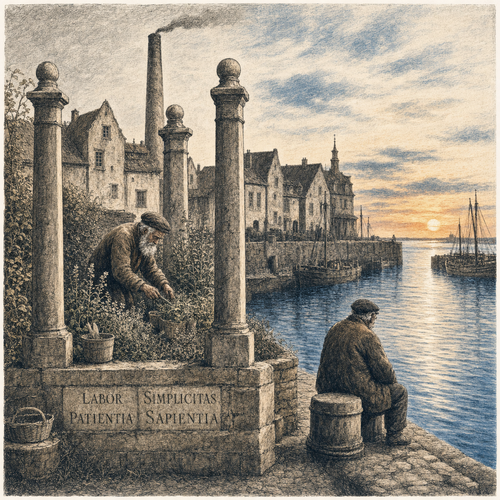
Behind the village lay a garden called Jan's garden, although Jan had been dead for forty-five years.
There was no sign and there was no fence. Fourteen kinds grew there, and eleven of them were edible.
Whoever tended the garden did so until they could no longer, and then gave the key to the shed to someone else. No words were exchanged. The key was given.
Theia was seventy-two when she passed it on.
She gave it to a fourteen-year-old boy who, the year before, had asked her why the garden was not laid out in rows, like all the other gardens.
She had answered then that it had always been that way.
And at night she had lain awake over it, because that was precisely the answer she had said all her life was not an answer.
She went and looked into it. It turned out that the garden was not laid out in rows because Jan could not rake rows on account of his back.
There was no wisdom behind it. There was a back behind it.
She told the boy that when she gave him the key. She said nothing more.
The boy laid the garden out in rows.
The following year he took them out again, because in rows the soil dried out too quickly between the plants, and so it turned out that there was nevertheless something Jan had found with his crooked back without knowing it.
But the boy knew that now, and Jan had never known it, and that is the difference.
To whom do you give the key, and do you tell them why the garden is laid out as it is?
And no one had lied.
This book does one thing, and it does it forty-four times.
It shows people who do not lie, are not lazy, are not malicious, and are not stupid, yet with whom things still go wrong. Things go wrong because beneath their good work lay an assumption that had once been correct and that no one had checked anymore.
That is not comforting, nor is it meant to be comforting.
Whoever thinks after this book that he now knows how it must be done has not understood it. There is no sieve that catches everything. Anthea checked all her life, and the sheet-pile wall still collapsed, and when Theia reproached her for it, Theia was right.
The only answer this book gives is the answer Anthea gave that evening: that there must then be many of them.
It is a meagre answer.
It is the only one there is.
———
Book Three is Anthea’s book.
It is about the question of how a person is brought up
so that he can bear all this.